Robotics projects usually need specialist support when the challenge involves integration, safety, controls, custom tooling, or production handover—not simply selecting a robot.
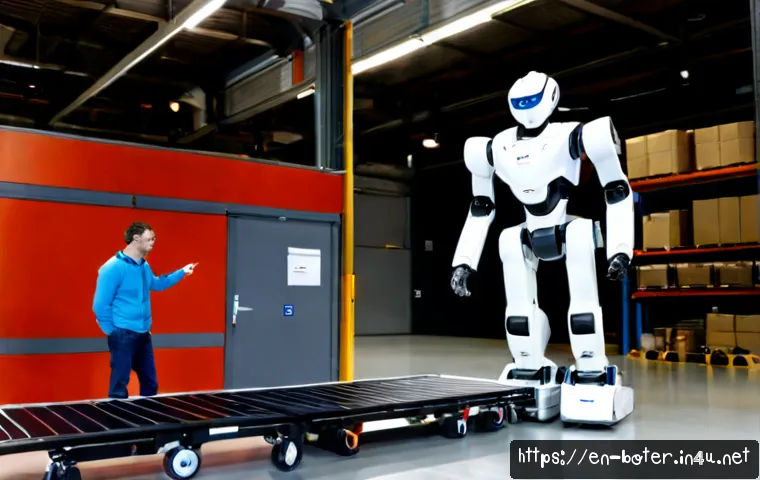
Internal teams can often manage early process mapping or vendor discussions, while a robotics consultant or systems integrator may add value when the scope crosses mechanical, electrical, software, and operational boundaries.
The right engagement depends on the business problem, the facility conditions, and the level of responsibility required after installation. A feasibility review can reduce uncertainty before a larger commitment, while a prototype can test the process under realistic conditions.
Full deployment requires clear acceptance tests, documentation, safety planning, and a maintenance path. Comparing engineering service quotes by deliverables rather than headline price makes the decision more practical.
At a Glance
- Choose support based on the operational problem, not only the robot brand or model.
- Integration often drives the work: tooling, controls, safety, software, and facility conditions can matter more than robot hardware.
- Separate installation from long-term readiness by defining testing, documentation, training, maintenance, and handover responsibilities.
| Engagement Type | Primary Decision It Supports | Typical Value Driver | Useful Quote Question |
|---|---|---|---|
| Feasibility assessment | Is automation practical for this process? | Early identification of constraints and unknowns | What assumptions, site inputs, and risks will the review document? |
| Prototype development | Can the process work under representative conditions? | Testing a technical concept before a wider rollout | Which performance conditions will be tested, and what remains outside the prototype? |
| System integration | How will the robot operate within the facility? | Coordination of equipment, controls, safety, and workflow | Who owns interfaces, acceptance testing, and production handover? |
| Managed support | How will the system remain usable after launch? | Maintenance planning, troubleshooting, and controlled changes | What documentation, training, and response responsibilities are included? |
What Robotics Engineering Work Looks Like in a Typical Project
Match the specialist’s scope to the operational problem
A robot is only one part of an automation system. A practical robotics engineering assignment may involve process review, mechanical design, electrical interfaces, controls programming, software, vision, end-of-arm tooling, safety functions, and operator workflow planning.
Start with the bottleneck. If the problem is unclear, a feasibility assessment may be more useful than requesting a complete automation proposal. If the task is already defined but the facility has complicated equipment interfaces, an industrial automation integration scope may be the better fit.
Do not assume that a provider with experience in one robot platform is automatically suitable for every application. The relevant question is whether the provider can address the process, integration requirements, and delivery responsibility involved.
From process review to production handover
A typical project can begin with observing the current workflow and identifying what the robot must handle. The work may then move into cell layout, tooling, controls design, programming, safety planning, installation support, testing, and handover.
The amount of engineering required can vary greatly. A limited review might identify whether a concept deserves further investigation. A prototype may focus on a single task. A production deployment can require coordination between robot equipment, upstream and downstream machinery, facility utilities, data systems, and operator procedures.
Production handover should not be treated as an afterthought. A system that moves parts during a demonstration is not necessarily ready for repeatable operation. Clarify who is responsible for unresolved issues, operational instructions, technical files, and the transition to maintenance.
Deliverables that make engineering work measurable
Engineering service quotes are easier to compare when the requested outputs are concrete. Useful deliverables may include a documented process review, a concept layout, an interface list, a controls description, a testing plan, operator guidance, maintenance information, and handover records.
For a robotics consulting engagement, ask whether the output is intended to support a buying decision, guide an internal engineering team, or become a build-ready integration package. These are different levels of responsibility and should not be priced or evaluated as if they were identical.
Comparing Common Robotics Engagements: Feasibility, Prototype, Integration, and Support
What each engagement is designed to solve
A feasibility assessment is appropriate when the organization needs to understand the process and identify technical constraints before selecting equipment. It is especially useful when payload, part variability, cycle expectations, access limitations, or safety needs are not yet clear.
A prototype is suitable when the central question is whether a method can work with representative materials, parts, tooling, sensing, or sequence logic. It can help narrow uncertainty without treating an early concept as a final production design.
System integration becomes more relevant when equipment must work together in a live operating environment. This can include robot programming, controls interfaces, safeguarding, data connections, and coordination with existing machinery.
Managed support addresses the period after installation. It may cover controlled changes, fault investigation, maintenance planning, training support, and the practical ownership of technical documentation.
Cost factors beyond the robot purchase price
The robot purchase price is not the full automation project cost. Integration requirements may include custom tooling, mechanical mounting, electrical work, controls hardware, programming, vision components, safety guarding, facility modifications, testing, documentation, and training.
These items should be visible in a proposal, even when some details remain subject to confirmation. A low initial equipment figure can be difficult to evaluate if it does not state who owns interface work, safety validation activities, or support after commissioning.
When comparing robotics consulting or systems integration proposals, separate hardware supply, engineering effort, site work, and ongoing support. This does not make the final budget predictable by itself, but it makes scope gaps easier to spot.
Case Analysis Framework: How to Assess a Robotics Project Step by Step
Define the process bottleneck and target outcome
Begin with the current process rather than a preferred robot configuration. What is slowing the operation down? Is the concern consistency, repetitive handling, a difficult workstation, a quality-sensitive task, or an interface between operations?
Then define the intended outcome in operational terms. The target should make it possible to evaluate the concept later. Avoid vague requests such as “automate the line” when the actual need is to improve a specific transfer, inspection, assembly, or packaging step.
A small proof of concept may be the better next step when key process conditions remain unknown. It can provide evidence for a later deployment without assuming that every production requirement has already been resolved.
Review payload, reach, cycle time, vision, tooling, and facility constraints
A practical technical review considers the item being handled, required robot movement, process sequence, available space, tooling needs, sensing or vision needs, and constraints created by existing equipment. Facility conditions can also affect layout, access, electrical connections, and installation planning.
These factors are connected. A robot may have the necessary reach but still require custom end-of-arm tooling. A vision system may help locate variable parts but introduce software, lighting, calibration, or data-handling requirements. An apparently simple cell can become complex when it must exchange signals with several existing machines.
Ask the provider to identify assumptions clearly. If a requirement has not been verified at the facility, it should be listed as an open item rather than quietly included as a certainty.
Set acceptance tests, documentation needs, and handover responsibilities
Acceptance criteria should explain how the buyer and provider will evaluate the delivered system. The criteria should match the agreed scope and distinguish between a concept demonstration, prototype result, and production handover.
Documentation should also be discussed before work starts. Relevant materials may include operating instructions, maintenance guidance, electrical or controls information, program backup expectations, interface records, and training responsibilities. The precise requirements depend on the project and local obligations.
Define responsibility at the handover point. Confirm who addresses outstanding items, who has authority to approve changes, and who will support the system once normal production begins.

Common Delivery Risks and Mistakes to Avoid
Treating robot hardware as the entire project budget
Focusing only on the robot model can create an incomplete comparison. The larger effort may be in creating a workable cell around it: tooling, fixtures, controls, guarding, interfaces, programming, and commissioning.
A better approach is to request a scope breakdown. It does not need to contain artificial precision, but it should make visible what is included, what depends on site verification, and what is excluded.
Underestimating guarding, safety functions, and operator workflow changes
Safety should be evaluated as part of the system, not added after the layout is fixed. Guarding, access methods, safety functions, recovery procedures, and normal operator interaction can affect both the design and the operating experience.
Local safety obligations and validation expectations vary. Confirm applicable requirements with qualified parties for the relevant location and application. Do not rely on a generic cell concept as proof that a specific installation is suitable.
Leaving data integration, maintenance, and training outside the scope
A robot cell may need to exchange information with other equipment or software. If data requirements are important, identify them early. The same applies to backups, fault handling, change control, preventive maintenance, and staff training.
Unsupported production systems can become difficult to modify or troubleshoot. A proposal should state whether post-installation support is included and what internal capability the buyer is expected to maintain.
When to Use an Internal Team, Robotics Consultant, or Systems Integrator
Best fit for internal engineering teams
An internal team may be well positioned to map the process, define operational priorities, coordinate plant stakeholders, and manage existing facility knowledge. This is especially helpful when the team understands the product flow, equipment history, and daily operating constraints.
Internal ownership remains important even when external engineering services are used. The business still needs someone to make decisions on process priorities, acceptance criteria, operational changes, and long-term system ownership.
When independent technical review adds value
An independent robotics consultant can be useful when the organization needs an early technical review, a neutral comparison of vendor approaches, or clearer requirements before requesting proposals. This can help separate the process need from a particular equipment recommendation.
The consultant’s scope should be explicit. Confirm whether the engagement is advisory only, whether it includes specification development, and whether the provider has any role in later procurement or integration.
When an integrator or outsourced engineering team is more suitable
A systems integrator or outsourced engineering team may be more suitable when the project needs coordinated delivery across mechanical, electrical, controls, software, safety, and commissioning work. This is often the case when a robot must operate within an existing production environment.
Ask who will manage subcontractors, site coordination, change requests, testing, and final handover. The best arrangement is not always the broadest scope; it is the scope with clear technical accountability for the work that actually needs to be done.
Selection Criteria and Comparison Summary
Before choosing robotics consulting, industrial automation integration, or an internal delivery path, compare proposals using a short decision checklist:
- Scope clarity: Does the proposal define deliverables, exclusions, assumptions, and site inputs?
- Relevant application experience: Does the provider understand the type of process and integration challenge involved?
- Technical accountability: Is it clear who owns controls interfaces, safety coordination, testing, and handover?
- Acceptance criteria: Are the test method and approval responsibilities described before work begins?
- Support path: Are documentation, training, maintenance planning, and post-installation support addressed?
For a robotics engineering quote request, provide a process description, available facility information, known constraints, desired outcomes, and the expected decision stage. Review official service descriptions and detailed proposal conditions directly from the relevant provider before approving work.
In Closing
A useful robotics project analysis starts with the operational task, then works outward to equipment, integration, safety, testing, and support. The robot itself matters, but it should not be the only basis for comparing options. A smaller feasibility review or prototype can be a sensible choice when important process conditions are still uncertain. For larger deployments, clear deliverables and acceptance criteria are often more valuable than a broad but undefined promise.
Useful Information to Keep in Mind
1. A feasibility review, prototype, and production deployment answer different questions.
2. Integration effort may exceed the apparent complexity of the robot hardware.
3. Safety, documentation, maintenance, and training should be considered separately from installation.
4. Compare engineering service quotes by responsibilities and deliverables, not only by the initial price.
Important Notes
This is general project-planning guidance, not a verification of any provider’s qualifications, insurance, certifications, or local compliance obligations. Actual project cost, schedule, safety requirements, and engineering responsibilities depend on the robot application, facility, location, and final scope. Confirm local requirements and provider credentials before approving a robotics automation project.
Frequently Asked Questions
Q1. How much does a robotics engineering consultant or systems integrator typically cost?
A1. Costs depend on the scope, facility conditions, technical complexity, level of documentation, safety work, integration needs, and support responsibilities. A feasibility review, prototype, and full production integration should be quoted as different types of work. Ask for a clear breakdown of deliverables, assumptions, exclusions, and post-installation support.
Q2. When is it better to hire a robotics specialist instead of buying a robot directly from a vendor?
A2. Specialist support may be useful when the project involves uncertain process requirements, custom tooling, controls interfaces, safety planning, vision, data integration, or production handover. Buying a robot directly may be only one part of the decision; the larger question is whether the organization can safely and reliably integrate it into the intended workflow.
Q3. What should a company check before approving a robotics automation project?
A3. Check the defined process problem, target outcome, facility constraints, integration responsibilities, safety approach, acceptance tests, documentation, training, maintenance plan, and support ownership. Also confirm which assumptions still need site verification and whether a proof of concept would be more appropriate than an immediate full rollout.