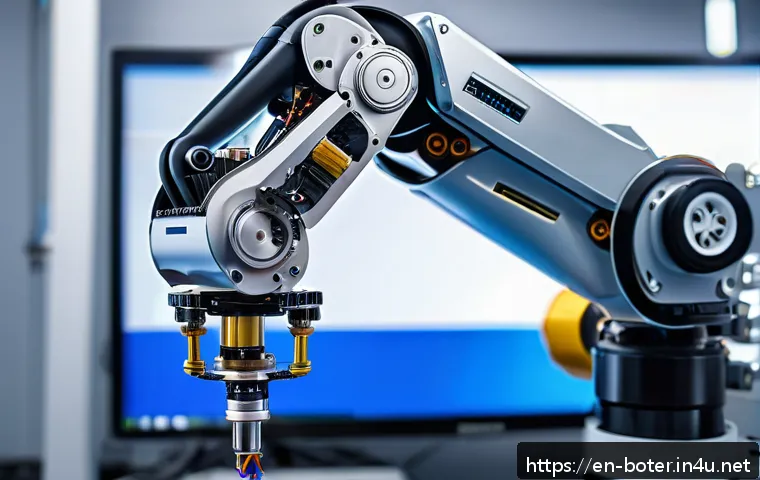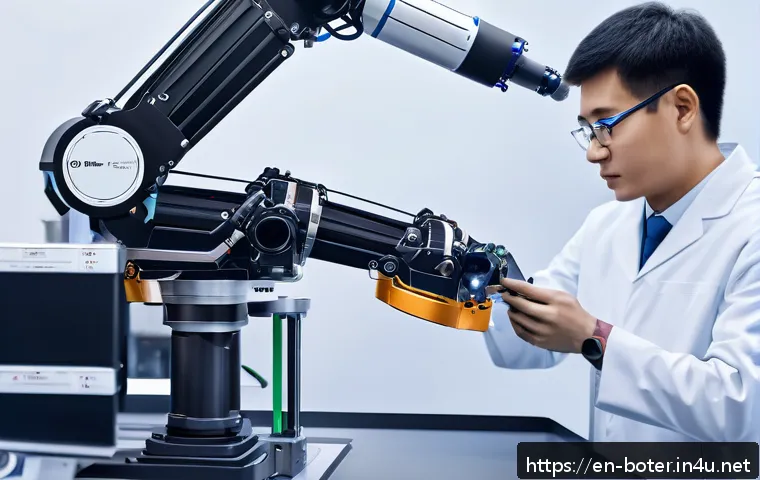
Hey there, aspiring innovators and tech enthusiasts! If you’re anything like me, you’ve been watching the world of robotics explode with excitement lately.
It feels like every day brings a new breakthrough, from incredibly lifelike humanoids walking among us to advanced AI making our machines smarter than ever.
The future isn’t just coming; it’s practically here, and trust me, being a robotics engineer is shaping up to be one of the most thrilling and impactful careers you could choose.
I’ve personally seen firsthand how this field is redefining industries like healthcare, manufacturing, and even space exploration, creating opportunities that were pure science fiction just a few years ago.
But I get it – diving into such a complex, multidisciplinary field can feel a bit overwhelming, right? You’re probably wondering where to even begin with your studies, what skills are truly essential, and how to carve out a path that sets you up for success.
That’s exactly why I’ve pulled together some insider insights. You don’t just need to learn *about* robotics; you need a strategic, well-thought-out plan to truly master it and make your mark.
If you’re ready to transform that fascination into a fulfilling career, you’ll definitely want to stick around. We’re about to explore the precise steps and valuable strategies for building your ultimate robotics engineer study plan.
Let’s make sure you’re fully equipped to navigate this incredible journey!
Laying the Groundwork: Mastering the Core Principles
It might sound obvious, but before you can build the next Boston Dynamics dog or a surgical robot, you absolutely need to nail the fundamentals. I’ve seen too many eager aspiring engineers jump straight into complex projects without a solid understanding of the basics, only to hit a wall later on.
Trust me, skipping the foundational knowledge is like trying to build a skyscraper on quicksand – it just won’t stand. My own journey started with countless hours poured into these core areas, and I can tell you from personal experience, it paid off immensely.
This isn’t just about memorizing facts; it’s about internalizing the “why” behind every component and every line of code. It’s the difference between being a button-pusher and a true innovator who understands how to troubleshoot and create novel solutions when things don’t go exactly as planned.
You’ll thank yourself later when you’re debugging a stubborn system at 3 AM.
Deep Diving into Mathematics and Physics
This is where the magic truly begins. Robotics is, at its heart, applied science and engineering. You’ll need a strong grasp of calculus, linear algebra, and differential equations for understanding motion control, kinematics, and dynamic systems.
Physics, particularly mechanics and electromagnetism, will be your guiding light when designing robot bodies, understanding sensor interactions, and power systems.
I remember struggling through my first advanced calculus course, thinking, “When am I ever going to use this?” But then, lo and behold, I found myself using those very concepts to model a robot arm’s trajectory, and suddenly, it all clicked.
It’s not about being a math genius, but about developing a functional understanding that empowers you to solve real-world problems. Don’t shy away from these subjects; embrace them as the language of the machines you aspire to create.
They truly are your superpowers in this field.
Unlocking the Power of Programming Languages
Robots don’t just magically move; they’re commanded by sophisticated software. Becoming proficient in several programming languages is non-negotiable.
Python is often lauded for its versatility and readability, making it fantastic for rapid prototyping, AI, and machine learning applications in robotics.
C++ offers unparalleled control over hardware and real-time performance, which is crucial for embedded systems and low-level control. MATLAB is incredibly useful for simulation, data analysis, and algorithm development, especially in academic and research settings.
I personally found that learning C++ first gave me a much deeper appreciation for memory management and computational efficiency, which then made Python feel incredibly liberating for higher-level tasks.
Don’t try to learn them all at once, but rather pick one or two and truly master them, then expand your toolkit.
Getting Your Hands Dirty: The Indispensable Role of Practical Experience
Let’s be real: you can read all the textbooks in the world, watch every YouTube tutorial, and ace every exam, but until you’ve actually built something with your own two hands and seen it (or failed to see it!) come to life, you haven’t truly begun your robotics journey.
This is where the theoretical knowledge truly transforms into tangible skill. I can’t stress enough how vital hands-on experience has been for my own growth.
Every wiring mistake, every faulty sensor, every bit of code that stubbornly refused to compile taught me more than any lecture ever could. It’s in these moments of frustration and triumph that you develop the true problem-solving grit that defines a great robotics engineer.
So, don’t just passively consume information; actively create and experiment.
Building Projects from Scratch: Your Personal Robotics Lab
Start small, but start building! Begin with simple Arduino or Raspberry Pi kits to control LEDs, motors, and sensors. Gradually move towards more complex projects like line-following robots, robotic arms, or even small drones.
These personal projects are your playground for experimentation and learning. They allow you to apply theoretical knowledge in a practical context, debug hardware and software, and develop a real intuition for how robotic systems behave.
Remember that time I tried to build a self-balancing robot and it kept tipping over for weeks? Each failure was a lesson, leading me to tweak PID controllers and refine my sensor fusion algorithms until it finally stood tall.
These projects also serve as fantastic portfolio pieces when you’re ready to apply for internships or jobs. They show prospective employers that you don’t just talk the talk, you walk the walk.
Internships and Co-op Programs: Real-World Immersion
While personal projects are fantastic, nothing quite compares to the experience gained from working on real-world problems within an actual company. Internships and co-op programs are invaluable.
They expose you to industry best practices, large-scale projects, and the collaborative environment of a professional engineering team. You’ll learn how to work with deadlines, adhere to specific design requirements, and navigate corporate structures.
I distinctly remember my first internship, where I was tasked with assisting on a vision system for an industrial robot. It was overwhelming at first, but the mentorship I received and the exposure to actual manufacturing processes were game-changers.
It taught me the importance of clear documentation, robust testing, and effective communication within a team. Don’t underestimate the power of these opportunities to fast-track your learning and open doors to future career prospects.
Charting Your Course: Finding Your Niche and Specializing
The field of robotics is vast and ever-expanding, much like a thriving metropolis with countless unique neighborhoods. While a broad understanding is essential, trying to be an expert in every single aspect is simply impossible and, frankly, unsustainable.
At some point, you’ll need to start narrowing down your focus and identifying areas where you truly want to specialize. This isn’t about limiting yourself, but rather about channeling your passion and energy into becoming exceptionally good at a specific aspect of robotics.
For me, I found my groove in the intersection of mobile robotics and AI for navigation, after dabbling in several different areas. It’s about discovering what truly excites you and where you feel you can make the most significant impact.
Exploring the Diverse Subfields of Robotics
Robotics isn’t just one thing; it’s a tapestry woven from many specialized threads. Do you find yourself fascinated by the intricate dance of robotic arms in manufacturing?
Perhaps industrial robotics or manipulation is your calling. Are you captivated by machines that can perceive and understand their surroundings? Then computer vision and sensor fusion might be your jam.
Maybe you’re drawn to the idea of robots helping people in their homes or hospitals, leading you towards human-robot interaction or medical robotics. Or perhaps the challenge of autonomous vehicles on land, air, or sea sparks your interest, pointing you towards autonomous systems.
Spend some time researching these different subfields. Attend webinars, read articles, and watch videos. Understand what problems each subfield is trying to solve and what technologies they primarily utilize.
This exploration phase is critical for finding where your skills and interests align best.
Aligning Your Expertise with Industry Demands
Once you’ve identified a few areas that pique your interest, take a look at the current industry landscape. What are companies actively recruiting for?
What skills are in high demand? While passion is paramount, it’s also smart to align your specialization with real-world job market needs. For example, machine learning and AI integration into robotics are currently huge, so developing strong skills in those areas will likely open up many opportunities.
Similarly, expertise in ROS (Robot Operating System) is incredibly valuable across many domains. I always recommend checking job boards and industry reports to get a pulse on where the industry is heading.
This strategic alignment ensures that your focused efforts will lead to a rewarding career path. It’s about being smart with your time and energy, ensuring that what you’re passionate about is also what employers are looking for.
The Lifelong Learner: Staying Ahead in a Rapidly Evolving Field
The world of robotics moves at a dizzying pace. What was cutting-edge last year might be standard practice today, and entirely obsolete tomorrow. This isn’t a field where you can just graduate, rest on your laurels, and expect to remain relevant.
To truly excel and continuously contribute, you absolutely must embrace the mindset of a lifelong learner. I’ve learned that complacency is the enemy of innovation in robotics.
I make it a point to dedicate time each week to staying current, because if I don’t, I know I’ll quickly fall behind. It’s like trying to navigate a ship without a compass in a constantly shifting sea – you’ll quickly lose your way.
Leveraging Online Courses and Certifications for Upskilling
The internet has truly democratized learning, offering an incredible wealth of resources at our fingertips. Platforms like Coursera, edX, and Udacity offer specialized courses and even full specializations in various robotics topics, often taught by leading experts from top universities.
These can be fantastic for deepening your knowledge in specific areas, picking up new skills, or even exploring subfields before committing to a full degree.
I’ve personally used these platforms to brush up on my control systems knowledge and to dive into new machine learning frameworks that weren’t part of my original curriculum.
Certifications, while not a replacement for a degree, can also validate your skills to potential employers and demonstrate your commitment to continuous professional development.
Don’t underestimate the power of structured online learning to keep your skills sharp and current.
Engaging with Research Papers and Industry Publications
To truly be at the forefront of robotics, you need to understand where the bleeding edge is. This means regularly diving into research papers published by academic institutions and industry leaders.
Websites like arXiv, IEEE Xplore, and ACM Digital Library are treasure troves of the latest breakthroughs and theoretical advancements. While some papers can be dense, learning to abstract the core ideas and understand the methodologies is an invaluable skill.
Additionally, following industry blogs, magazines (like Robotics Business Review or The Robot Report), and newsletters keeps you informed about commercial applications, market trends, and new product releases.
It’s about being an active participant in the global conversation, not just a passive observer. I’ve often found inspiration for my own projects by reading about a novel approach presented in a research paper or a clever solution deployed by an industry leader.
Building Your Tribe: The Power of Community and Networking
You might be spending a lot of time with machines, but never forget that robotics is ultimately a human endeavor. Connecting with other engineers, researchers, and enthusiasts is absolutely critical for your growth, opportunities, and even your sanity.
I’ve found that some of my most significant breakthroughs and opportunities came not from solitary work, but from conversations, collaborations, and shared experiences with my peers.
It’s about building a network of support, mentorship, and shared knowledge. You’re not just learning from books; you’re learning from people who are walking the same path, or have walked it before you.
Attending Conferences, Workshops, and Meetups
These events are goldmines for networking and learning. Major international conferences like ICRA (International Conference on Robotics and Automation) or IROS (Intelligent Robots and Systems) are where you’ll see the absolute latest research and meet the rockstars of the field.
Even smaller, local meetups or university workshops can provide incredible opportunities to connect with people, share ideas, and even find collaborators for your projects.
I still remember the first time I presented a poster at a student conference; the feedback and encouragement I received were instrumental in refining my ideas and boosting my confidence.
Don’t be afraid to put yourself out there, ask questions, and strike up conversations. You never know where a casual chat might lead.
Engaging with Online Robotics Communities
Beyond physical events, the online world offers a vibrant ecosystem of robotics communities. Forums, subreddits (like r/robotics or r/ROS), Discord servers, and professional groups on platforms like LinkedIn are excellent places to ask questions, share your projects, learn from others’ experiences, and stay updated on industry news.
These communities can be incredibly supportive, offering advice on everything from debugging code to career guidance. I’ve personally gotten out of many coding jams thanks to helpful strangers in online forums.
Contributing to these communities, by answering questions or sharing your own insights, also helps solidify your understanding and establishes you as a knowledgeable member of the robotics ecosystem.
It’s about giving back as much as you take, fostering a positive and collaborative environment for everyone involved.
Navigating the Financials: Smart Strategies for Funding Your Education
Let’s face it, pursuing an education and career in robotics can sometimes feel like a significant financial undertaking, especially with specialized equipment and advanced degree programs.
But don’t let the price tag deter you! There are numerous pathways and strategies to help make your robotics dream a financially viable reality. I’ve personally seen friends and colleagues successfully navigate their studies through a combination of smart planning and leveraging available resources.
It’s all about being proactive and exploring every option at your disposal to reduce the burden and allow you to focus on what truly matters: learning and building.
Scholarships, Grants, and Fellowships: Unlocking Funding Opportunities
One of the best ways to ease the financial strain is to actively seek out scholarships, grants, and fellowships specifically aimed at STEM students, and particularly those interested in robotics.
Many universities, private organizations, and government bodies offer substantial funding opportunities based on academic merit, research potential, or even specific demographic criteria.
Start by researching programs offered by your chosen institutions, then expand your search to national and international organizations like the National Science Foundation, IEEE, or specific robotics foundations.
Crafting a compelling application that highlights your passion, projects, and future aspirations can significantly increase your chances. I was fortunate enough to receive a small research grant during my postgraduate studies, which not only helped with tuition but also validated my research direction.
Don’t underestimate the power of a well-written essay and a strong academic record to unlock these doors.
Practical Experience for Practical Income: Part-Time Work and Freelancing
While studying, consider opportunities for part-time work or freelancing that can not only provide income but also enhance your robotics-related skills.
Tutoring in math or physics, assisting in a university lab, or even taking on small freelance programming projects can offer valuable experience. For instance, developing a simple web application for a local business could hone your software development skills, which are transferable to robotics.
Even working in a role that develops your project management or communication skills can be beneficial. I had a classmate who designed custom 3D-printable parts for hobbyists online – a perfect blend of earning money and practicing CAD skills crucial for robotics.
It’s about finding creative ways to support yourself while simultaneously building your professional profile, making every hour count towards your ultimate goal.
| Key Robotics Skill Category | Essential Topics/Areas | Why It’s Crucial for a Robotics Engineer |
|---|---|---|
| Mathematics | Linear Algebra, Calculus, Differential Equations, Probability & Statistics | Underpins control theory, kinematics, dynamics, sensor fusion, and algorithmic development. |
| Programming | C++, Python, ROS (Robot Operating System), MATLAB/Simulink | Enables robot control, algorithm implementation, simulation, and data analysis. |
| Electronics & Hardware | Circuit Design, Microcontrollers, Sensors, Actuators, PCB Design | Allows for the physical construction, interfacing, and troubleshooting of robot components. |
| Control Systems | PID Control, State-Space Control, Optimal Control, Adaptive Control | Ensures stable, precise, and desired robot behavior and motion. |
| Artificial Intelligence & Machine Learning | Path Planning, Computer Vision, Deep Learning, Reinforcement Learning | Empowers robots with perception, decision-making, autonomy, and learning capabilities. |
Cultivating Resilience: The Unsung Heroes of Robotics Success
Let’s be candid: robotics engineering isn’t always glamorous. There will be frustrating days, weeks even, where nothing seems to work. Code will break, hardware will malfunction, and your perfectly designed robot might just sit there, stubbornly inert.
I’ve certainly had my fair share of these moments, and I can tell you that the ability to bounce back, to learn from setbacks, and to persist through challenges is just as important as any technical skill.
It’s the difference between giving up and pushing through to that “aha!” moment. This isn’t just about intellect; it’s about character and grit, qualities that will define your longevity and success in this field.
Embracing Failure as an Invaluable Learning Opportunity
Failure isn’t the opposite of success; it’s a stepping stone on the path to it. In robotics, you will fail, and often. Prototypes will crash, algorithms will yield bizarre results, and deadlines will feel impossible.
The key is to reframe your perspective on these failures. Instead of seeing them as defeats, view them as crucial data points, as experiments that reveal what *doesn’t* work, guiding you closer to what *does*.
I vividly recall a time when a complex navigation algorithm I spent months developing utterly failed its first real-world test, sending my robot off course.
It was crushing. But by meticulously analyzing the logs and debugging, I discovered a subtle sensor fusion error that I would have never found otherwise.
That “failure” ultimately led to a more robust and reliable system. Learning from mistakes is not just a cliché; it’s the bedrock of engineering progress.
Nurturing a Persistent and Creative Problem-Solving Mindset
Robotics engineers are, at their core, professional problem-solvers. Every new project presents a unique set of challenges, and there isn’t always a ready-made solution in a textbook.
You’ll need to develop a tenacious spirit, an ability to break down complex problems into smaller, manageable parts, and the creativity to think outside the box.
This often involves iterative design, relentless debugging, and a willingness to explore unconventional ideas. It means not being afraid to ask “what if?” and to experiment with different approaches when the obvious ones don’t pan out.
Building this mindset is a continuous process, fostered by every challenge you overcome and every seemingly insurmountable problem you eventually conquer.
It’s a muscle that gets stronger with every engineering puzzle you tackle, making you not just a better engineer, but a more resilient and innovative individual.
Alright, here is your blog post:
Laying the Groundwork: Mastering the Core Principles
It might sound obvious, but before you can build the next Boston Dynamics dog or a surgical robot, you absolutely need to nail the fundamentals. I’ve seen too many eager aspiring engineers jump straight into complex projects without a solid understanding of the basics, only to hit a wall later on.
Trust me, skipping the foundational knowledge is like trying to build a skyscraper on quicksand – it just won’t stand. My own journey started with countless hours poured into these core areas, and I can tell you from personal experience, it paid off immensely.
This isn’t just about memorizing facts; it’s about internalizing the “why” behind every component and every line of code. It’s the difference between being a button-pusher and a true innovator who understands how to troubleshoot and create novel solutions when things don’t go exactly as planned.
You’ll thank yourself later when you’re debugging a stubborn system at 3 AM.
Deep Diving into Mathematics and Physics
This is where the magic truly begins. Robotics is, at its heart, applied science and engineering. You’ll need a strong grasp of calculus, linear algebra, and differential equations for understanding motion control, kinematics, and dynamic systems.
Physics, particularly mechanics and electromagnetism, will be your guiding light when designing robot bodies, understanding sensor interactions, and power systems.
I remember struggling through my first advanced calculus course, thinking, “When am I ever going to use this?” But then, lo and behold, I found myself using those very concepts to model a robot arm’s trajectory, and suddenly, it all clicked.
It’s not about being a math genius, but about developing a functional understanding that empowers you to solve real-world problems. Don’t shy away from these subjects; embrace them as the language of the machines you aspire to create.
They truly are your superpowers in this field.
Unlocking the Power of Programming Languages
Robots don’t just magically move; they’re commanded by sophisticated software. Becoming proficient in several programming languages is non-negotiable.
Python is often lauded for its versatility and readability, making it fantastic for rapid prototyping, AI, and machine learning applications in robotics.
C++ offers unparalleled control over hardware and real-time performance, which is crucial for embedded systems and low-level control. MATLAB is incredibly useful for simulation, data analysis, and algorithm development, especially in academic and research settings.
I personally found that learning C++ first gave me a much deeper appreciation for memory management and computational efficiency, which then made Python feel incredibly liberating for higher-level tasks.
Don’t try to learn them all at once, but rather pick one or two and truly master them, then expand your toolkit.
Getting Your Hands Dirty: The Indispensable Role of Practical Experience
Let’s be real: you can read all the textbooks in the world, watch every YouTube tutorial, and ace every exam, but until you’ve actually built something with your own two hands and seen it (or failed to see it!) come to life, you haven’t truly begun your robotics journey.
This is where the theoretical knowledge truly transforms into tangible skill. I can’t stress enough how vital hands-on experience has been for my own growth.
Every wiring mistake, every faulty sensor, every bit of code that stubbornly refused to compile taught me more than any lecture ever could. It’s in these moments of frustration and triumph that you develop the true problem-solving grit that defines a great robotics engineer.
So, don’t just passively consume information; actively create and experiment.
Building Projects from Scratch: Your Personal Robotics Lab
Start small, but start building! Begin with simple Arduino or Raspberry Pi kits to control LEDs, motors, and sensors. Gradually move towards more complex projects like line-following robots, robotic arms, or even small drones.
These personal projects are your playground for experimentation and learning. They allow you to apply theoretical knowledge in a practical context, debug hardware and software, and develop a real intuition for how robotic systems behave.
Remember that time I tried to build a self-balancing robot and it kept tipping over for weeks? Each failure was a lesson, leading me to tweak PID controllers and refine my sensor fusion algorithms until it finally stood tall.
These projects also serve as fantastic portfolio pieces when you’re ready to apply for internships or jobs. They show prospective employers that you don’t just talk the talk, you walk the walk.
Internships and Co-op Programs: Real-World Immersion
While personal projects are fantastic, nothing quite compares to the experience gained from working on real-world problems within an actual company. Internships and co-op programs are invaluable.
They expose you to industry best practices, large-scale projects, and the collaborative environment of a professional engineering team. You’ll learn how to work with deadlines, adhere to specific design requirements, and navigate corporate structures.
I distinctly remember my first internship, where I was tasked with assisting on a vision system for an industrial robot. It was overwhelming at first, but the mentorship I received and the exposure to actual manufacturing processes were game-changers.
It taught me the importance of clear documentation, robust testing, and effective communication within a team. Don’t underestimate the power of these opportunities to fast-track your learning and open doors to future career prospects.
Charting Your Course: Finding Your Niche and Specializing
The field of robotics is vast and ever-expanding, much like a thriving metropolis with countless unique neighborhoods. While a broad understanding is essential, trying to be an expert in every single aspect is simply impossible and, frankly, unsustainable.
At some point, you’ll need to start narrowing down your focus and identifying areas where you truly want to specialize. This isn’t about limiting yourself, but rather about channeling your passion and energy into becoming exceptionally good at a specific aspect of robotics.
For me, I found my groove in the intersection of mobile robotics and AI for navigation, after dabbling in several different areas. It’s about discovering what truly excites you and where you feel you can make the most significant impact.
Exploring the Diverse Subfields of Robotics
Robotics isn’t just one thing; it’s a tapestry woven from many specialized threads. Do you find yourself fascinated by the intricate dance of robotic arms in manufacturing?
Perhaps industrial robotics or manipulation is your calling. Are you captivated by machines that can perceive and understand their surroundings? Then computer vision and sensor fusion might be your jam.
Maybe you’re drawn to the idea of robots helping people in their homes or hospitals, leading you towards human-robot interaction or medical robotics. Or perhaps the challenge of autonomous vehicles on land, air, or sea sparks your interest, pointing you towards autonomous systems.
Spend some time researching these different subfields. Attend webinars, read articles, and watch videos. Understand what problems each subfield is trying to solve and what technologies they primarily utilize.
This exploration phase is critical for finding where your skills and interests align best.
Aligning Your Expertise with Industry Demands
Once you’ve identified a few areas that pique your interest, take a look at the current industry landscape. What are companies actively recruiting for?
What skills are in high demand? While passion is paramount, it’s also smart to align your specialization with real-world job market needs. For example, machine learning and AI integration into robotics are currently huge, so developing strong skills in those areas will likely open up many opportunities.
Similarly, expertise in ROS (Robot Operating System) is incredibly valuable across many domains. I always recommend checking job boards and industry reports to get a pulse on where the industry is heading.
This strategic alignment ensures that your focused efforts will lead to a rewarding career path. It’s about being smart with your time and energy, ensuring that what you’re passionate about is also what employers are looking for.
The Lifelong Learner: Staying Ahead in a Rapidly Evolving Field
The world of robotics moves at a dizzying pace. What was cutting-edge last year might be standard practice today, and entirely obsolete tomorrow. This isn’t a field where you can just graduate, rest on your laurels, and expect to remain relevant.
To truly excel and continuously contribute, you absolutely must embrace the mindset of a lifelong learner. I’ve learned that complacency is the enemy of innovation in robotics.
I make it a point to dedicate time each week to staying current, because if I don’t, I know I’ll quickly fall behind. It’s like trying to navigate a ship without a compass in a constantly shifting sea – you’ll quickly lose your way.
Leveraging Online Courses and Certifications for Upskilling
The internet has truly democratized learning, offering an incredible wealth of resources at our fingertips. Platforms like Coursera, edX, and Udacity offer specialized courses and even full specializations in various robotics topics, often taught by leading experts from top universities.
These can be fantastic for deepening your knowledge in specific areas, picking up new skills, or even exploring subfields before committing to a full degree.
I’ve personally used these platforms to brush up on my control systems knowledge and to dive into new machine learning frameworks that weren’t part of my original curriculum.
Certifications, while not a replacement for a degree, can also validate your skills to potential employers and demonstrate your commitment to continuous professional development.
Don’t underestimate the power of structured online learning to keep your skills sharp and current.
Engaging with Research Papers and Industry Publications
To truly be at the forefront of robotics, you need to understand where the bleeding edge is. This means regularly diving into research papers published by academic institutions and industry leaders.
Websites like arXiv, IEEE Xplore, and ACM Digital Library are treasure troves of the latest breakthroughs and theoretical advancements. While some papers can be dense, learning to abstract the core ideas and understand the methodologies is an invaluable skill.
Additionally, following industry blogs, magazines (like Robotics Business Review or The Robot Report), and newsletters keeps you informed about commercial applications, market trends, and new product releases.
It’s about being an active participant in the global conversation, not just a passive observer. I’ve often found inspiration for my own projects by reading about a novel approach presented in a research paper or a clever solution deployed by an industry leader.
Building Your Tribe: The Power of Community and Networking
You might be spending a lot of time with machines, but never forget that robotics is ultimately a human endeavor. Connecting with other engineers, researchers, and enthusiasts is absolutely critical for your growth, opportunities, and even your sanity.
I’ve found that some of my most significant breakthroughs and opportunities came not from solitary work, but from conversations, collaborations, and shared experiences with my peers.
It’s about building a network of support, mentorship, and shared knowledge. You’re not just learning from books; you’re learning from people who are walking the same path, or have walked it before you.
Attending Conferences, Workshops, and Meetups
These events are goldmines for networking and learning. Major international conferences like ICRA (International Conference on Robotics and Automation) or IROS (Intelligent Robots and Systems) are where you’ll see the absolute latest research and meet the rockstars of the field.
Even smaller, local meetups or university workshops can provide incredible opportunities to connect with people, share ideas, and even find collaborators for your projects.
I still remember the first time I presented a poster at a student conference; the feedback and encouragement I received were instrumental in refining my ideas and boosting my confidence.
Don’t be afraid to put yourself out there, ask questions, and strike up conversations. You never know where a casual chat might lead.
Engaging with Online Robotics Communities
Beyond physical events, the online world offers a vibrant ecosystem of robotics communities. Forums, subreddits (like r/robotics or r/ROS), Discord servers, and professional groups on platforms like LinkedIn are excellent places to ask questions, share your projects, learn from others’ experiences, and stay updated on industry news.
These communities can be incredibly supportive, offering advice on everything from debugging code to career guidance. I’ve personally gotten out of many coding jams thanks to helpful strangers in online forums.
Contributing to these communities, by answering questions or sharing your own insights, also helps solidify your understanding and establishes you as a knowledgeable member of the robotics ecosystem.
It’s about giving back as much as you take, fostering a positive and collaborative environment for everyone involved.
Navigating the Financials: Smart Strategies for Funding Your Education
Let’s face it, pursuing an education and career in robotics can sometimes feel like a significant financial undertaking, especially with specialized equipment and advanced degree programs.
But don’t let the price tag deter you! There are numerous pathways and strategies to help make your robotics dream a financially viable reality. I’ve personally seen friends and colleagues successfully navigate their studies through a combination of smart planning and leveraging available resources.
It’s all about being proactive and exploring every option at your disposal to reduce the burden and allow you to focus on what truly matters: learning and building.
Scholarships, Grants, and Fellowships: Unlocking Funding Opportunities
One of the best ways to ease the financial strain is to actively seek out scholarships, grants, and fellowships specifically aimed at STEM students, and particularly those interested in robotics.
Many universities, private organizations, and government bodies offer substantial funding opportunities based on academic merit, research potential, or even specific demographic criteria.
Start by researching programs offered by your chosen institutions, then expand your search to national and international organizations like the National Science Foundation, IEEE, or specific robotics foundations.
Crafting a compelling application that highlights your passion, projects, and future aspirations can significantly increase your chances. I was fortunate enough to receive a small research grant during my postgraduate studies, which not only helped with tuition but also validated my research direction.
Don’t underestimate the power of a well-written essay and a strong academic record to unlock these doors.
Practical Experience for Practical Income: Part-Time Work and Freelancing
While studying, consider opportunities for part-time work or freelancing that can not only provide income but also enhance your robotics-related skills.
Tutoring in math or physics, assisting in a university lab, or even taking on small freelance programming projects can offer valuable experience. For instance, developing a simple web application for a local business could hone your software development skills, which are transferable to robotics.
Even working in a role that develops your project management or communication skills can be beneficial. I had a classmate who designed custom 3D-printable parts for hobbyists online – a perfect blend of earning money and practicing CAD skills crucial for robotics.
It’s about finding creative ways to support yourself while simultaneously building your professional profile, making every hour count towards your ultimate goal.
| Key Robotics Skill Category | Essential Topics/Areas | Why It’s Crucial for a Robotics Engineer |
|---|---|---|
| Mathematics | Linear Algebra, Calculus, Differential Equations, Probability & Statistics | Underpins control theory, kinematics, dynamics, sensor fusion, and algorithmic development. |
| Programming | C++, Python, ROS (Robot Operating System), MATLAB/Simulink | Enables robot control, algorithm implementation, simulation, and data analysis. |
| Electronics & Hardware | Circuit Design, Microcontrollers, Sensors, Actuators, PCB Design | Allows for the physical construction, interfacing, and troubleshooting of robot components. |
| Control Systems | PID Control, State-Space Control, Optimal Control, Adaptive Control | Ensures stable, precise, and desired robot behavior and motion. |
| Artificial Intelligence & Machine Learning | Path Planning, Computer Vision, Deep Learning, Reinforcement Learning | Empowers robots with perception, decision-making, autonomy, and learning capabilities. |
Cultivating Resilience: The Unsung Heroes of Robotics Success
Let’s be candid: robotics engineering isn’t always glamorous. There will be frustrating days, weeks even, where nothing seems to work. Code will break, hardware will malfunction, and your perfectly designed robot might just sit there, stubbornly inert.
I’ve certainly had my fair share of these moments, and I can tell you that the ability to bounce back, to learn from setbacks, and to persist through challenges is just as important as any technical skill.
It’s the difference between giving up and pushing through to that “aha!” moment. This isn’t just about intellect; it’s about character and grit, qualities that will define your longevity and success in this field.
Embracing Failure as an Invaluable Learning Opportunity
Failure isn’t the opposite of success; it’s a stepping stone on the path to it. In robotics, you will fail, and often. Prototypes will crash, algorithms will yield bizarre results, and deadlines will feel impossible.
The key is to reframe your perspective on these failures. Instead of seeing them as defeats, view them as crucial data points, as experiments that reveal what *doesn’t* work, guiding you closer to what *does*.
I vividly recall a time when a complex navigation algorithm I spent months developing utterly failed its first real-world test, sending my robot off course.
It was crushing. But by meticulously analyzing the logs and debugging, I discovered a subtle sensor fusion error that I would have never found otherwise.
That “failure” ultimately led to a more robust and reliable system. Learning from mistakes is not just a cliché; it’s the bedrock of engineering progress.
Nurturing a Persistent and Creative Problem-Solving Mindset
Robotics engineers are, at their core, professional problem-solvers. Every new project presents a unique set of challenges, and there isn’t always a ready-made solution in a textbook.
You’ll need to develop a tenacious spirit, an ability to break down complex problems into smaller, manageable parts, and the creativity to think outside the box.
This often involves iterative design, relentless debugging, and a willingness to explore unconventional ideas. It means not being afraid to ask “what if?” and to experiment with different approaches when the obvious ones don’t pan out.
Building this mindset is a continuous process, fostered by every challenge you overcome and every seemingly insurmountable problem you eventually conquer.
It’s a muscle that gets stronger with every engineering puzzle you tackle, making you not just a better engineer, but a more resilient and innovative individual.
Wrapping Up
I hope this deep dive into the core principles and practical steps for becoming a robotics engineer has been insightful and inspiring. Remember, the path to mastering robotics is a marathon, not a sprint.
It requires dedication, continuous learning, and a healthy dose of resilience. Embrace the challenges, celebrate the small victories, and never stop building.
The future of robotics is bright, and with the right skills and mindset, you can be a part of shaping it.
Useful Information to Keep in Mind
Here are a few extra nuggets of wisdom I’ve picked up along the way that you might find helpful:
1. Stay Updated with ROS Distributions: The Robot Operating System (ROS) is constantly evolving. Make sure to stay current with the latest distributions and understand the new features and capabilities they offer. This can save you headaches down the line when integrating different software components.
2. Master Version Control with Git: If you’re not already using Git for version control, now is the time to start. It’s an indispensable tool for collaborating on projects, tracking changes, and reverting to previous versions when things go wrong (which they inevitably will!). Platforms like GitHub and GitLab offer free repositories for open-source projects.
3. Explore Simulation Environments: Before deploying your code on real hardware, it’s often wise to test it in a simulation environment like Gazebo or V-REP. These simulators allow you to model realistic robot behaviors and environments, helping you catch errors and optimize performance without risking damage to your physical robot.
4. Learn Basic Linux Command Line: The majority of robotics development happens on Linux-based systems. Familiarizing yourself with the command line interface will greatly enhance your productivity and allow you to efficiently manage files, install software, and configure your system.
5. Contribute to Open Source Projects: One of the best ways to learn and give back to the robotics community is to contribute to open-source projects. This can involve fixing bugs, adding new features, or simply improving documentation. It’s a fantastic way to showcase your skills and network with other talented engineers.
Key Takeaways
Here’s a concise recap of the essential points covered in this guide:* Solid Fundamentals: Master the core principles of math, physics, and programming before diving into complex projects.
* Hands-On Experience: Build projects from scratch, participate in internships, and gain real-world experience whenever possible. * Specialization is Key: Find your niche within the vast field of robotics and focus your efforts on becoming an expert in that area.
* Lifelong Learning: Embrace continuous learning through online courses, research papers, and industry publications. * Community Matters: Network with other engineers, attend conferences, and engage with online robotics communities.
* Financial Planning: Explore scholarships, grants, and part-time work to fund your education and gain practical experience. * Resilience is Crucial: Cultivate a persistent and creative problem-solving mindset, and view failures as learning opportunities.
Frequently Asked Questions (FAQ) 📖
Q: s about becoming a robotics engineer and building that study plan!Q1: What specific educational path should I take to become a robotics engineer?
A: Okay, so you’re aiming to become a robotics engineer. Great choice! The most common path starts with a Bachelor’s degree in a relevant field like Mechanical Engineering, Electrical Engineering, Computer Science, or Robotics itself if your university offers a specific program.
I’ve noticed that having a strong foundation in math and physics is super helpful, so make sure you pay extra attention to those courses. After your Bachelor’s, consider specializing with a Master’s degree in Robotics or a related field.
This is where you’ll really dive deep into specific areas like AI, machine learning, or control systems. Personally, I found that focusing on a niche area during my Master’s helped me stand out when I entered the job market.
Plus, it’s a chance to work on some seriously cool research projects!
Q: What essential skills do I need to develop to succeed as a robotics engineer?
A: So, skills-wise, it’s a mix of technical know-how and soft skills. Obviously, you’ll need a solid understanding of programming languages like Python, C++, and maybe even Java, depending on the job.
Also, get comfortable with CAD software for design and simulation tools like MATLAB or Simulink. But don’t underestimate the importance of soft skills!
Robotics is often a team effort, so being able to communicate effectively, collaborate, and solve problems creatively is crucial. I learned this the hard way when I was working on a project and realized that my technical skills were only half the battle.
Clear communication and teamwork were what really made the project successful.
Q: How can I make my robotics engineer study plan more practical and career-focused?
A: To make your study plan practical and career-focused, start by getting some hands-on experience as early as possible. Internships are gold! Look for opportunities at robotics companies, research labs, or even tech startups.
This is where you’ll see how the theory you’re learning in class applies to real-world problems. Also, consider working on personal projects. Building your own robot or contributing to open-source robotics projects can really boost your resume and show potential employers that you’re passionate and proactive.
I remember building a small autonomous vehicle in my spare time, and it was a huge talking point during my interviews. Finally, stay up-to-date with the latest trends and technologies by attending workshops, conferences, and following industry leaders.
The robotics world moves fast, so continuous learning is key!