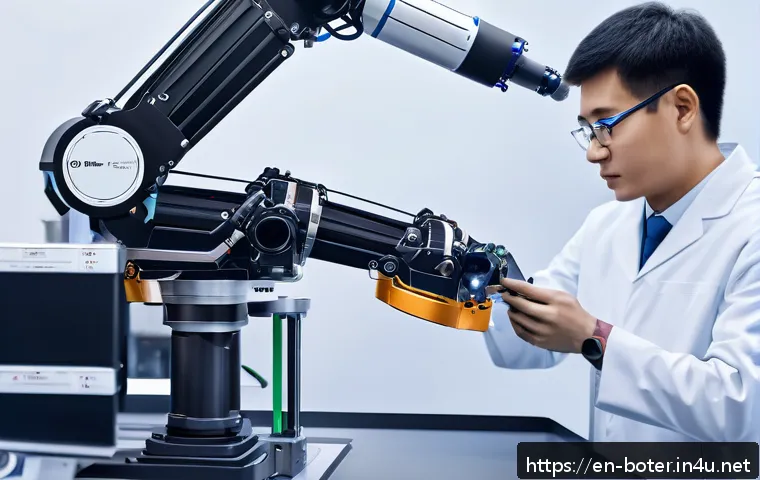
Hey everyone! If you’re anything like me, you’ve probably felt that thrill when you see Boston Dynamics robots dancing or SpaceX rockets landing autonomously.
It’s hard to deny that robotics is one of the most exciting, fast-paced fields out there, constantly pushing the boundaries of what we thought was possible.
Just a few years ago, AI integration at this level felt like science fiction, and now it’s a core component of robotics exams! Whether it’s the rise of collaborative robots working seamlessly alongside humans or the ethical challenges of truly autonomous systems, this industry demands a unique blend of creativity, problem-solving, and a commitment to continuous learning.
I’ve personally navigated the maze of certifications and exam preparations, and trust me, it can feel overwhelming trying to keep up with everything from advanced AI algorithms to intricate control systems.
But don’t you worry! From my experience, having a solid, actionable checklist isn’t just helpful; it’s absolutely crucial for turning that exam anxiety into confident success.
Think of it as your secret weapon to not only ace your Robotics Engineer certification but also to truly understand the cutting-edge trends like ROS (Robot Operating System) proficiency and the nuances of industrial automation that employers are actively looking for right now.
Ready to demystify the process and set yourself up for success? Let’s dive deeper and get you fully prepared!
Unpacking the Foundation: Essential Theories and Principles
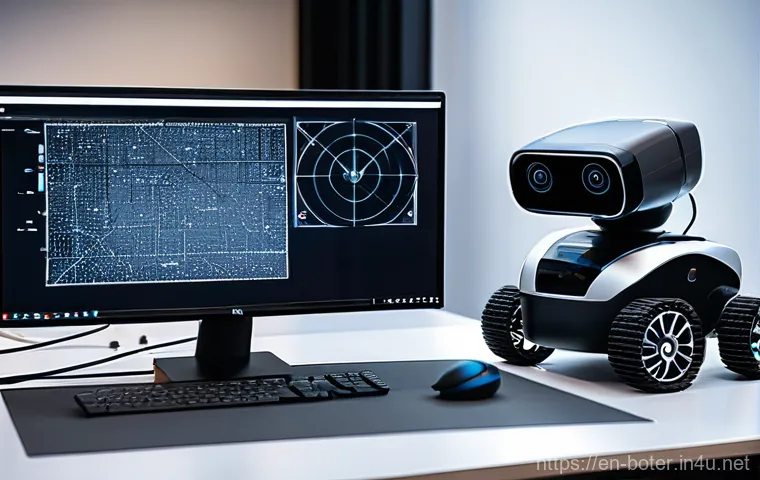
Alright, let’s kick things off by talking about the bedrock of robotics – those essential theories and principles that might seem daunting at first glance, but are absolutely crucial for building anything truly robust. When I first started diving into this field, I remember feeling a bit overwhelmed by the sheer volume of information. Kinematics, dynamics, control theory, linear algebra – it felt like a whole new language! But trust me, once you start seeing how these concepts fit together, it’s like watching a puzzle fall into place. It’s not just about memorizing formulas; it’s about understanding the ‘why’ behind robot movement, how forces affect it, and how we can precisely command it to do what we want. This foundational knowledge isn’t just for passing exams; it’s what empowers you to troubleshoot complex problems when your robot isn’t behaving as expected, or to innovate completely new solutions. I’ve personally been in situations where a deep understanding of, say, inverse kinematics saved a project from utter chaos, allowing me to quickly diagnose why a robot arm was moving erratically and get it back on track. It’s that initial investment in understanding the core that pays dividends throughout your entire career.
From Kinematics to Control: Bridging Theory and Practice
Let’s get real about kinematics and control theory for a moment. These aren’t just abstract concepts for textbooks; they are the very DNA of how a robot interacts with its environment. Kinematics, both forward and inverse, helps us understand where a robot’s end-effector will be given its joint angles, and vice versa. It’s like knowing exactly how to bend your arm to pick up a cup. Then comes dynamics, which brings in the forces and torques involved – essentially, how much “effort” your robot needs to exert to move or stay put. But the real magic, for me, happens with control theory. This is where we design the “brains” that tell the robot what to do and how to react. Think of PID controllers – Proportional, Integral, Derivative. These are classic, yet incredibly powerful tools that, when tuned correctly, can make a robot move smoothly, accurately, and stably. I’ve spent countless hours tweaking PID gains, watching a robot arm jitter uncontrollably, only to finally find that sweet spot where it performs like a dream. It’s a frustrating but ultimately incredibly satisfying process, and mastering it gives you a profound sense of control over your robotic creations. This hands-on experience, going from equations on paper to a physical robot executing your commands, is truly where the learning solidifies.
The Brains Behind the Bots: AI and Machine Learning Essentials
Now, let’s talk about the exciting world of AI and Machine Learning, because honestly, you can’t talk about modern robotics without them. AI isn’t just a buzzword anymore; it’s intrinsically woven into the fabric of advanced robotic systems, making them smarter, more adaptable, and incredibly powerful. From enabling robots to recognize objects in complex environments using computer vision, to allowing them to learn optimal grasping strategies through reinforcement learning, AI is the engine driving the next generation of automation. Understanding the basics of supervised, unsupervised, and reinforcement learning, along with neural network architectures, is becoming as fundamental as understanding circuit diagrams. I’ve personally seen projects transform from rigid, pre-programmed sequences to flexible, adaptive behaviors simply by integrating a touch of machine learning. For instance, imagine a pick-and-place robot that, instead of needing exact coordinates for every single item, can ‘see’ and ‘learn’ how to pick up slightly different objects. This isn’t just cool tech; it’s a huge leap in efficiency and robustness in real-world applications. Getting a grasp on these concepts will undoubtedly differentiate you in a crowded job market and prepare you for the cutting edge of the field.
Mastering the Robot Operating System (ROS): Your Operational Command Center
Okay, let’s get down to business with ROS – the Robot Operating System. If you’re serious about robotics, especially beyond hobby projects, ROS is practically a non-negotiable skill. It’s not an operating system in the traditional sense like Windows or macOS; rather, it’s a flexible framework for writing robot software, offering a collection of tools, libraries, and conventions that simplify the complex task of developing robotic applications. I remember when I first encountered ROS, it felt like learning to navigate an entirely new city with its own unique language and infrastructure. Nodes, topics, services, messages, launch files – it was a lot to take in! But once you grasp the underlying philosophy of modularity and communication, it truly becomes your command center for bringing robotic ideas to life. From controlling manipulator arms to navigating autonomous mobile platforms, ROS provides a standardized way to connect all the disparate components of a robot system. It’s honestly an incredible accelerator for development, allowing you to leverage vast communities and pre-existing solutions instead of reinventing the wheel for every single component. My own experience with ROS has shown me that it turns abstract ideas into tangible, working prototypes much faster than I ever thought possible, giving you a competitive edge.
Navigating the ROS Eco
The beauty of ROS lies in its expansive ecosystem. Beyond the core communication mechanisms, you have access to an incredible array of tools and libraries that are absolutely indispensable. Think about Gazebo, for example – a powerful 3D robot simulator that allows you to test your algorithms in a virtual environment before deploying them on expensive or delicate hardware. I’ve spent countless hours in Gazebo, debugging navigation stacks, testing path planning algorithms, and even simulating sensor data, all without risking actual damage to a robot. Then there’s RViz, the visualization tool, which is a lifesaver for understanding what your robot is ‘seeing’ and ‘thinking’ in real-time. It displays sensor data, robot models, and navigation paths in an intuitive way that makes debugging a thousand times easier. Learning the standard ROS workflows, from creating your own packages to writing launch files for complex system startups, is like learning the secret handshake of the robotics world. It ensures your projects are organized, scalable, and most importantly, shareable with other developers. Embracing these tools and understanding how they integrate into a cohesive development workflow is truly what separates the casual enthusiast from the professional robotics engineer. It’s an investment that significantly streamlines your development cycle.
Putting ROS to Work: Practical Application and Troubleshooting
While understanding the theoretical underpinnings of ROS is essential, where it truly comes alive is in practical application. This means getting your hands dirty with real-world scenarios and, inevitably, facing the frustrations of troubleshooting. Setting up a mobile robot to navigate an unfamiliar environment using ROS involves integrating various sensors – LiDAR, cameras, IMUs – running complex algorithms for Simultaneous Localization and Mapping (SLAM), and then executing path planning. I can vividly recall a project where our robot kept getting ‘lost’ in mapping, and it took days of scrutinizing topic data in RViz and tweaking configuration parameters to finally realize a subtle timing issue in sensor data fusion was the culprit. These kinds of challenges are where you truly learn. They force you to dig deep into the documentation, understand the nuances of different ROS packages, and develop a systematic approach to problem-solving. It’s not just about writing code; it’s about making that code robust enough to handle the unpredictable nature of the physical world. The invaluable experience gained from debugging a live ROS system will give you the confidence and expertise to tackle almost any robotics challenge that comes your way, making you an incredibly valuable asset in any team.
Demystifying Industrial Automation: From Factories to Smart Systems
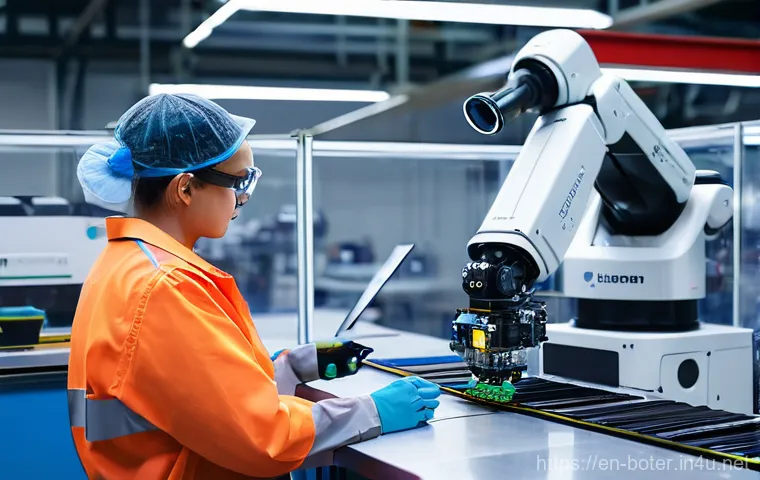
Moving from individual robots to the broader scope, let’s talk about industrial automation. This is where robotics truly transforms industries, boosting efficiency, safety, and productivity on a massive scale. If you’ve ever toured a modern manufacturing facility, you’ve probably seen collaborative robots working alongside humans, or fully autonomous systems handling repetitive, dangerous, or precise tasks. It’s a completely different beast from a standalone research robot; here, reliability, uptime, and integration with existing infrastructure are paramount. Understanding industrial automation isn’t just about knowing robots; it’s about grasping the entire ecosystem of control systems that orchestrate these complex operations. This includes everything from the low-level logic of PLCs to the high-level oversight of SCADA systems, all increasingly tied together with IoT technologies. The learning curve here involves not just the technical aspects but also a deep appreciation for process flow, operational efficiency, and, crucially, safety standards. I’ve personally witnessed the profound impact of well-implemented automation, turning manual, error-prone assembly lines into sleek, highly efficient production hubs. This isn’t just about replacing human labor; it’s about augmenting it and creating new, more engaging roles for people in supervision and maintenance.
The Heartbeat of Industry: PLCs, SCADA, and IoT Integration
At the core of industrial automation are Programmable Logic Controllers (PLCs) and Supervisory Control and Data Acquisition (SCADA) systems. PLCs are the workhorses – robust, reliable, and designed to control discrete processes in real-time, like turning motors on/off or managing conveyor belts. They’re often programmed in ladder logic, which can feel a bit retro compared to modern coding languages, but it’s incredibly effective for its purpose. SCADA systems, on the other hand, provide the human-machine interface (HMI) and data collection capabilities, allowing operators to monitor and control entire factory floors from a central location. I’ve found that understanding how these systems communicate and integrate is vital. And let’s not forget the Internet of Things (IoT) – it’s rapidly becoming the connective tissue that brings all these traditionally disparate systems together. Imagine sensors on every machine providing real-time data about performance, predictive maintenance needs, or even energy consumption, all feeding into a central analytics platform. This isn’t just hypothetical; I’ve worked on projects where integrating simple IoT sensors into legacy PLC systems provided invaluable insights, leading to significant cost savings and reduced downtime. The ability to bridge these different technological layers is a skill that is incredibly sought after in today’s industrial landscape.
Safety First: Compliance and Best Practices in Automated Environments
When you’re dealing with powerful machinery and robots in an industrial setting, safety isn’t just a recommendation; it’s the absolute top priority. Non-compliance can lead to serious injuries, costly downtime, and severe legal repercussions. This is why understanding safety standards and best practices, like ISO 10218 for industrial robots or OSHA regulations, is just as important as mastering your programming skills. It involves everything from designing robot cells with appropriate guarding and emergency stop buttons to implementing robust safety circuits and conducting thorough risk assessments. I’ve spent time on factory floors where every single movement of a robot arm was analyzed for potential pinch points or collision risks, and safety light curtains were meticulously installed to ensure human operators were protected. It’s about designing systems that are inherently safe, failing gracefully, and always prioritizing human well-being. Furthermore, with the rise of collaborative robots (cobots), understanding human-robot interaction safety is becoming even more nuanced. These robots are designed to work directly alongside people, which necessitates different safety considerations, often involving force and speed monitoring to prevent harm. A true robotics professional doesn’t just build functional systems; they build safe ones, and that commitment to safety is paramount.
Cultivating Practical Proficiency: Hands-On Experience and Project Work
Theory is fantastic, and certifications are great, but nothing, and I mean nothing, beats hands-on experience when it comes to truly mastering robotics. It’s one thing to read about an inverse kinematics algorithm; it’s an entirely different beast to implement it, debug it on a physical robot arm, and watch it gracefully perform a pick-and-place task. This is where the rubber meets the road, and where you genuinely learn the quirks and challenges of integrating software with hardware in the real world. My advice to anyone aspiring in this field is to start building things – anything! Even small projects, like controlling a simple robotic car with an Arduino or programming a basic manipulator using open-source libraries, will teach you invaluable lessons about power management, sensor noise, motor control, and software architecture. These experiences are what transform theoretical knowledge into practical wisdom, preparing you not just for exams but for the day-to-day realities of being a robotics engineer. Don’t be afraid to break things (within reason, of course!); that’s often where the most profound learning happens. The satisfaction of seeing your code physically move something in the real world is an unparalleled feeling, and it fuels the passion to keep learning and building.
Building Your Robotics Portfolio: From Concepts to Creations
Your robotics portfolio is your professional handshake, a tangible demonstration of your skills and expertise that goes far beyond what a resume can convey. It’s not enough to just list languages or frameworks you know; employers want to see what you’ve actually built. Think about personal projects that showcase a range of skills: perhaps a mobile robot that can navigate an environment and avoid obstacles, or a robotic arm that performs a specific assembly task using computer vision. These projects don’t have to be groundbreaking, but they should be well-documented, demonstrating your thought process, problem-solving abilities, and code quality. I’ve personally used my portfolio projects in interviews to illustrate how I tackle challenges, from initial concept to final implementation and troubleshooting. It’s an opportunity to talk passionately about what you’ve learned, the mistakes you made, and how you overcame them. Contributing to open-source robotics projects is another fantastic way to build your portfolio and gain collaborative experience. The key is to be active, be curious, and constantly be building. This is where your passion truly shines through, demonstrating not just what you know, but what you can *do*.
Simulation to Reality: Bridging the Gap with Real-World Hardware
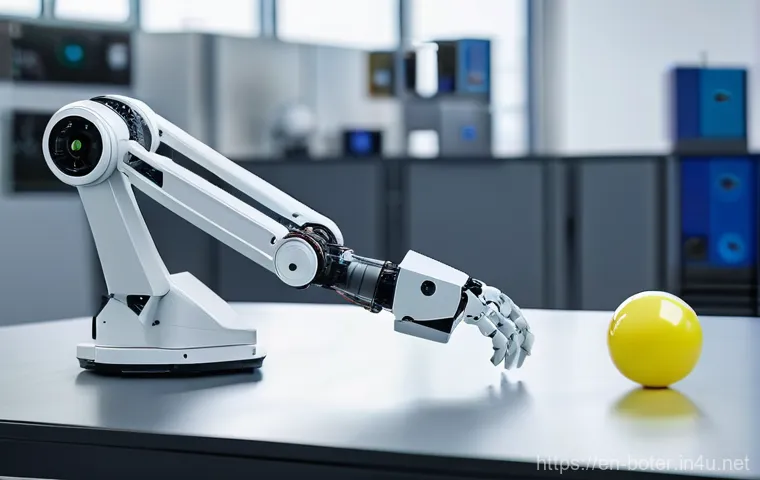
The transition from simulation to real-world hardware is where many budding robotics engineers hit a wall, and honestly, I’ve been there too. Simulations are incredible for rapid prototyping and testing algorithms in a controlled environment, but the physical world introduces a whole new layer of complexity. Friction, sensor noise, latency, power fluctuations, mechanical inaccuracies – none of these are perfectly modeled in a simulator. This is why it’s absolutely critical to bridge that gap by working with actual hardware as much as possible. Start with affordable platforms like Arduino, Raspberry Pi, or low-cost robotic kits, and gradually move to more complex systems. Learning how to interface motors, encoders, IMUs, and cameras, dealing with real-time operating systems (RTOS) if needed, and understanding the nuances of electrical engineering are all part of this journey. My personal “aha!” moment often comes when a beautifully performing simulation acts completely erratically on hardware, forcing me to confront the imperfections of the physical world and refine my approaches. This hands-on, iterative process of testing, debugging, and refining your code on physical robots is truly where you gain invaluable insights and build the confidence to tackle professional-grade robotics challenges.
Here’s a quick overview of key practical skills and project ideas to help kickstart your hands-on journey:
| Skill Area | Key Competencies | Example Projects |
|---|---|---|
| Programming | Python, C++, ROS packages, Git for version control, basic shell scripting | Robot arm inverse kinematics solver, mobile robot navigation stack, custom ROS package for sensor data processing |
| Control Systems | PID control implementation, state-space modeling, feedback control loops, motor control techniques (PWM) | Self-balancing robot, drone flight controller (basic), line-following robot with advanced path correction |
| Perception | Computer Vision (OpenCV for object detection/tracking), Sensor Fusion (Kalman filters), LiDAR point cloud processing | Object detection and grasping for a robotic arm, simultaneous localization and mapping (SLAM) for indoor navigation, facial recognition for robot interaction |
| Hardware Interfacing | Microcontroller programming (Arduino/ESP32), Raspberry Pi development, motor drivers, sensor integration (IMU, ultrasonic, LiDAR) | Building a custom robotic gripper, designing a sensor array for environmental monitoring, integrating a robotic chassis with motor controllers |
| Simulation | Gazebo for physical simulation, RViz for visualization, URDF/XACRO for robot modeling, simulation of sensor data | Simulating complex multi-robot systems, testing navigation algorithms in virtual environments, developing custom robot models for simulation |
Navigating the Certification Labyrinth: What to Expect and How to Conquer
So, you’ve put in the hours, built some awesome projects, and now you’re eyeing that Robotics Engineer certification. Fantastic! This is a pivotal step that can truly validate your expertise and open up new career doors. But let’s be honest, the idea of sitting for a major exam can be pretty nerve-wracking. I’ve been through it myself, and while the content can feel vast, approaching it strategically makes all the difference. Think of the certification not as a hurdle, but as a structured roadmap to ensure you have a comprehensive understanding of the field’s core competencies. It’s designed to test not just your memorization skills, but your ability to apply complex concepts to real-world scenarios, often under time pressure. The key is to understand what kind of knowledge they’re looking for – is it deep theoretical understanding, practical application, or perhaps troubleshooting skills? Knowing the exam’s focus helps you tailor your study plan and maximize your chances of success. It’s about being smart with your preparation, not just studying harder. Remember, the goal isn’t just to pass; it’s to truly internalize the knowledge that the certification signifies, making you a more competent and confident engineer.
Deconstructing the Exam Structure: Topics and Weightage
When preparing for any significant certification, the very first thing I do is meticulously deconstruct the exam structure. This means diving deep into the syllabus, understanding the specific topics covered, and critically, identifying the weightage given to each section. Is control theory going to be 30% of the exam, while embedded systems are only 10%? This information is gold! It tells you exactly where to focus your precious study time. Often, certifications will cover areas like kinematics, dynamics, control systems, sensors, actuators, programming languages (Python, C++), ROS, AI/ML basics, and industrial automation principles. Some might even include sections on ethics or safety standards. Knowing these breakdowns helps you create a balanced study plan. For instance, if you know a particular topic like advanced path planning has a high weightage, you’ll dedicate more hours to it, perhaps by reviewing multiple resources, practicing problems, and even doing mini-projects related to it. Conversely, if a topic is only lightly touched upon, you might focus on understanding the core concepts rather than getting bogged down in minute details. This strategic approach ensures your efforts are efficient and effective, preventing you from over-studying low-impact areas and under-preparing for critical ones.
Smart Study Strategies: Maximizing Your Preparation Time
Effective study isn’t just about logging hours; it’s about smart, targeted preparation. From my experience, one of the most powerful strategies is active recall. Instead of passively re-reading notes, test yourself frequently. Flashcards, practice quizzes, or even explaining concepts aloud to an imaginary audience can solidify your understanding far more effectively. Another game-changer for me was spaced repetition – reviewing material at increasing intervals over time. This helps move information from short-term to long-term memory, ensuring you retain it for the exam and beyond. Don’t underestimate the power of practice problems; robotics isn’t just theoretical, and applying concepts through problem-solving is crucial. If the certification offers practice exams, take them! They’re invaluable for familiarizing yourself with the format, question types, and time constraints. Also, consider forming a study group. Discussing concepts with peers can illuminate blind spots in your understanding and expose you to different perspectives. Finally, and this is crucial, don’t burn yourself out. Schedule regular breaks, get enough sleep, and maintain a healthy lifestyle. A well-rested mind is far more effective than an exhausted one. Remember, consistency and smart strategies trump cramming every single time when it comes to long-term learning and exam success.
The Human Element: Ethics, Safety, and the Future of Robotics
As we get deeper into the world of robotics, especially with the rapid advancements in AI and autonomy, it becomes increasingly important to look beyond the code and circuits and consider the broader human implications. Robotics isn’t just a technical field; it’s one with profound societal impact. This is where ethics and safety truly come to the forefront. It’s not just about building a robot that *can* do something; it’s about asking if it *should* do it, and how it can do it *safely* and *responsibly*. I’ve found that discussions around robot ethics and safety are not just academic exercises; they are vital for ensuring that our innovations serve humanity positively. From the ethical dilemmas of truly autonomous systems making critical decisions to the questions of data privacy when robots collect vast amounts of information, these are considerations every robotics engineer must grapple with. It’s about designing technology with a conscience, anticipating potential harms, and building in safeguards from the very beginning. Ignoring these aspects isn’t just irresponsible; it’s a short-sighted approach that can ultimately hinder the adoption and public acceptance of robotic technologies, which nobody wants to see happen.
Responsible Innovation: Addressing the Ethical Dilemmas
The ethical landscape of robotics is dynamic and complex, constantly evolving with new technological breakthroughs. Think about the ethical implications of facial recognition in public spaces, or the biases that can be inadvertently encoded into AI algorithms used by robots. As creators of these advanced systems, we carry a significant responsibility to consider their impact. This means actively engaging with questions like: How do we ensure fairness and transparency in AI decision-making? What are the boundaries of robotic autonomy, especially in critical applications? How do we protect user data collected by intelligent robots? These aren’t easy questions, and there aren’t always clear-cut answers, but grappling with them is part of becoming a truly responsible engineer. I’ve participated in countless discussions where these topics came up, and it really forces you to think beyond the immediate technical challenge. It’s about building trust with the public and ensuring that robotics development proceeds in a way that benefits everyone, not just a select few. Embracing these ethical considerations proactively will not only make you a better engineer but also contribute to a more sustainable and humane future for robotics.
Safety First, Always: Ensuring Human-Robot Collaboration
We touched on industrial safety earlier, but the emphasis on human-robot collaboration (HRC) brings a new dimension to safety. As robots move from caged-off areas to working side-by-side with humans, the interaction paradigm shifts dramatically. It’s no longer just about preventing collisions with static barriers; it’s about designing systems that can predict human intent, react intelligently to unforeseen movements, and operate within strict force and speed limits to prevent even minor injuries. Technologies like advanced force-torque sensors, safe perception systems, and intelligent collision avoidance algorithms are at the forefront of this effort. I’ve seen some incredible advancements in cobots that can detect a human presence and slow down or stop entirely before any contact is made, making them incredibly safe partners. However, the onus is still on the engineer to design, implement, and maintain these systems with an unwavering commitment to safety. This involves thorough risk assessments, rigorous testing, and continuous monitoring. A truly safe collaborative environment is a testament to meticulous engineering and a deep understanding of both robotic capabilities and human behavior. Ultimately, building trust and ensuring the well-being of people interacting with robots is not just a regulatory requirement; it’s a moral imperative that defines the future success and acceptance of robotics in our everyday lives.
Concluding Thoughts
And there you have it, folks! What a journey we’ve explored, from the foundational theories that underpin every robotic movement to the cutting-edge ethical considerations shaping our future. It’s clear that diving into robotics is an adventure of continuous learning, a blend of rigorous theory, hands-on experimentation, and thoughtful reflection. Remember, every expert was once a beginner, and the most crucial step is simply to start, to build, to break, and to learn from every single interaction with this incredible field. The world of robotics is vast and constantly evolving, offering endless opportunities for innovation and impact. Embrace the challenges, stay curious, and keep pushing the boundaries of what’s possible. I genuinely believe that with dedication and a passion for creating, you’re well on your way to making a significant mark in this exhilarating domain.
Useful Information to Know
1. Dive into Open-Source Projects: The robotics community thrives on sharing! Platforms like GitHub are overflowing with open-source ROS packages, simulation environments, and project codes. Contributing to these or even just studying them can accelerate your learning curve and expose you to best practices.
2. Network with Peers: Join online forums, local robotics clubs, or attend virtual meetups. Connecting with other enthusiasts and professionals isn’t just great for troubleshooting; it opens doors to collaboration, mentorship, and new perspectives you might not find in a textbook.
3. Master a Core Language (or two!): While C++ is the powerhouse for performance-critical applications, Python’s ease of use and extensive libraries make it indispensable for rapid prototyping, AI integration, and scripting in robotics. Being proficient in both gives you incredible versatility.
4. Don’t Skip the Math: Seriously, I know it can seem daunting, but a solid grasp of linear algebra, calculus, and differential equations will serve you well. These aren’t just academic exercises; they are the fundamental language robots speak for movement, perception, and control.
5. Start Small, Think Big: Begin with manageable projects, like controlling a single servo or a simple mobile base. As your confidence grows, gradually integrate more complex components like sensors, vision systems, or navigation algorithms. Each small success builds the foundation for your next big breakthrough.
Key Takeaways
Ultimately, becoming proficient in robotics hinges on a few core pillars. First, a robust understanding of fundamental theories like kinematics, dynamics, and control theory is non-negotiable; it’s the bedrock. Second, practical, hands-on experience, preferably with ROS, is where theory transforms into real-world capability, building your portfolio and problem-solving skills. Finally, never lose sight of the “human element” – the ethical considerations, safety standards, and societal impact of the powerful technologies we create. By balancing these aspects, you won’t just build amazing robots; you’ll build them responsibly and effectively, ready to tackle the exciting challenges of tomorrow.
Frequently Asked Questions (FAQ) 📖
Q: There’s so much happening in robotics, especially with
A: I and complex control systems. It honestly feels a bit overwhelming trying to figure out where to start. What areas should I really hone in on to pass the Robotics Engineer certification and actually feel confident?
A1: Oh, I totally get that feeling! When I first dove into preparing for my certification, I felt like I was staring at a mountain of information. It’s easy to get lost in the sheer volume of topics, but from my experience, focusing your energy strategically makes all the difference.
For the certification, you absolutely need a strong grasp of foundational topics. Think about hitting the core areas hard: kinematics and dynamics (understanding how robots move), control theory (making them move the way you want!), sensor fusion (how robots perceive their environment), and, of course, a solid introduction to AI and machine learning for robotics.
Don’t try to master every single AI algorithm, but understand the principles behind perception, path planning, and basic decision-making. I found that creating a study plan that dedicated chunks of time to each of these, along with practical exercises, really helped cement the knowledge.
And trust me, understanding the ‘why’ behind each concept makes it stick so much better than just memorizing formulas!
Q: You mentioned ROS (Robot Operating System) proficiency and industrial automation as cutting-edge trends. How vital are these for both the certification and for actually landing a great job in robotics today?
A: That’s a fantastic question, and one I wish I had asked earlier in my journey! Let me tell you, ROS isn’t just a trend; it’s practically the lingua franca of robotics development in many sectors.
For the certification, while specific ROS questions might vary, understanding its architecture and core concepts is becoming increasingly important because it ties into everything from simulation to deployment.
But for your career? It’s non-negotiable for many roles. Employers are actively seeking candidates who can hit the ground running with ROS.
I’ve personally seen how much having a few solid projects built with ROS on my portfolio helped me stand out. As for industrial automation, that’s where a huge chunk of real-world robotics is right now.
Think manufacturing, logistics, and collaborative robots. Getting hands-on experience with PLCs (Programmable Logic Controllers) or even simulating industrial robot arms can give you a massive edge.
It’s not just about theoretical knowledge; it’s about showing you can apply it in a practical, industry-relevant context.
Q: Beyond just getting the certification, how do you personally stay updated with the incredibly fast pace of robotics, and what advice do you have for someone who wants to truly excel and make a significant impact in the field?
A: This is probably the most crucial question for long-term success, in my opinion! The robotics world moves at lightning speed, and if you stop learning, you’re quickly left behind.
My personal secret weapon is a multi-pronged approach. First, I make it a habit to regularly follow leading research labs and journals; setting up Google Scholar alerts for key terms is a lifesaver.
Second, I actively engage with the robotics community, both online through forums and LinkedIn groups, and by attending webinars or virtual conferences whenever I can.
It’s incredible how much you learn from discussing challenges and solutions with peers. Third, and this is a big one: personal projects. Nothing keeps you sharper than tackling a new challenge with a robot in your home lab or even just in simulation.
It’s where you truly put theory into practice, experiment with new libraries, and encounter real-world problems. This commitment to continuous learning, coupled with a genuine passion for problem-solving, is what I believe truly sets exceptional robotics engineers apart and allows them to make a real impact.