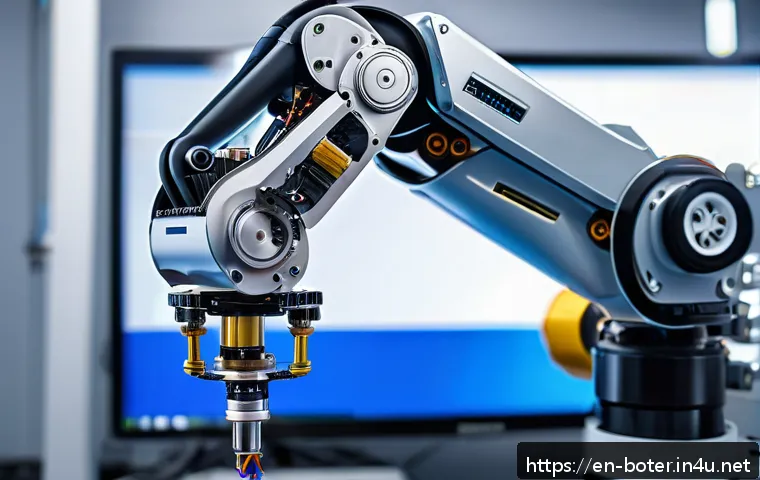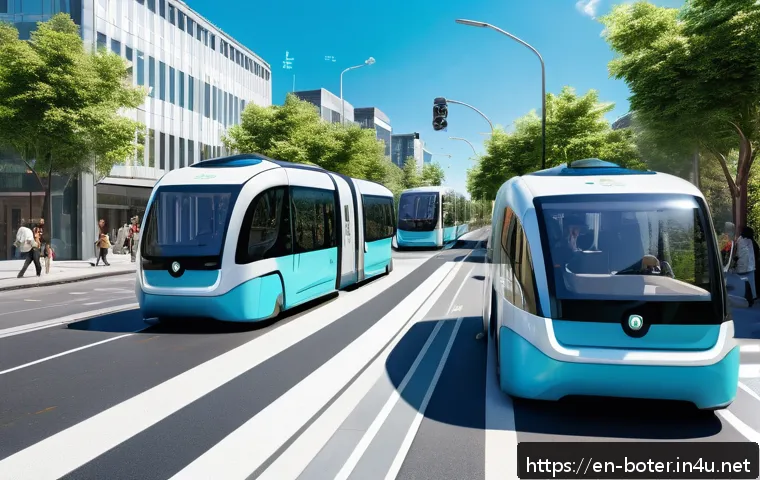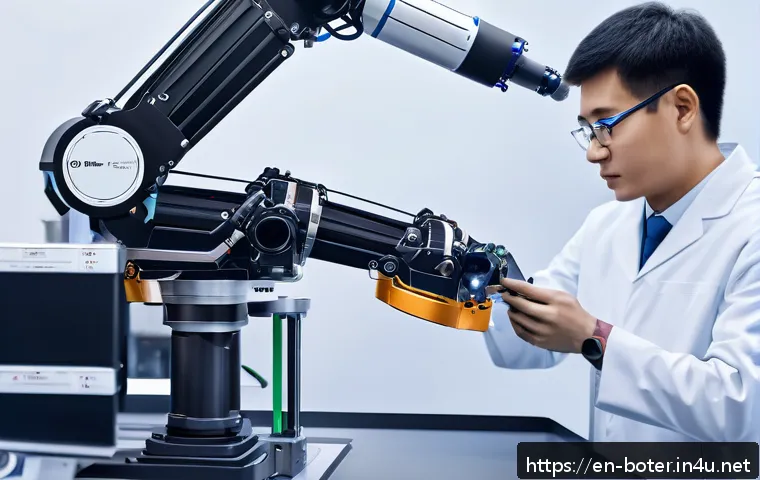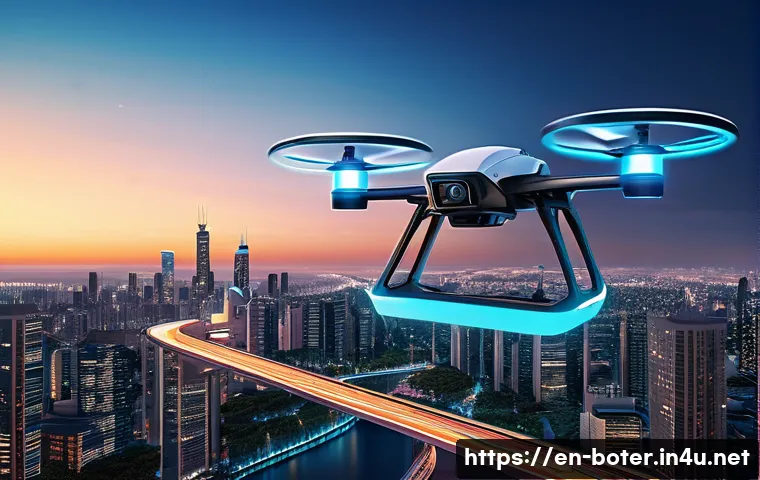
It’s almost surreal how quickly robots have moved from sci-fi dreams to tangible realities, now deeply interwoven into our daily fabric. Honestly, watching a sophisticated warehouse robot seamlessly sort thousands of packages or a nimble surgical assistant perform intricate procedures – it truly hits you: this isn’t just theory anymore, it’s a vibrant, expanding universe.
Behind every innovative leap, every autonomous decision, and every perfectly executed task lies the intricate, often exhilarating, world of robot software development, spearheaded by brilliant robotics engineers.
The future, with its promise of hyper-personalized automation, AI-driven logistics, and ethically designed intelligent systems, hinges entirely on these pioneering minds.
They’re not just coding; they’re literally forging the digital brains that power our physical world, wrestling with challenges like real-time adaptation and secure human-robot interaction.
Let’s dive deeper into this below.
The Unseen Architects of Automation: What Robotics Engineers Truly Do
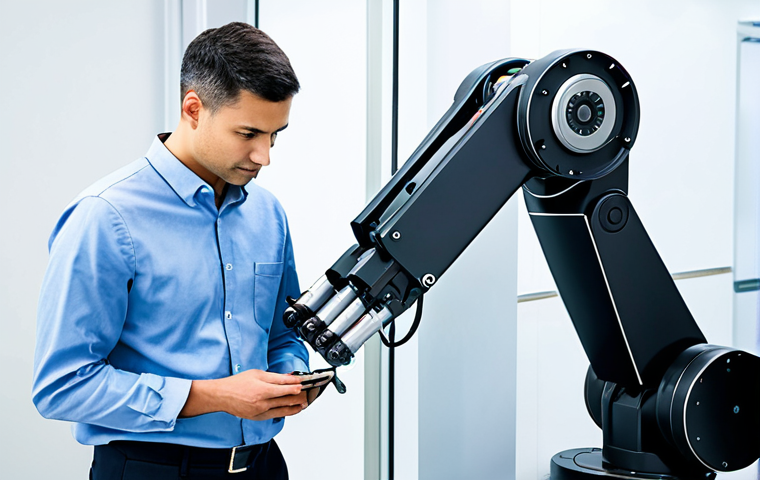
It’s easy to marvel at a robot performing a complex task, whether it’s assisting surgeons, delivering packages, or even vacuuming your living room floor.
But what often goes unnoticed are the brilliant minds behind the curtain, the robotics engineers who breathe digital life into these metallic marvels.
From my own vantage point, having spent countless hours immersed in this field, I can tell you it’s less about building shiny hardware and far more about meticulously crafting the intricate software that makes them truly intelligent and autonomous.
These aren’t just coders; they’re visionaries who translate abstract ideas into tangible, functional systems. They design the operating systems that allow robots to perceive their surroundings, the algorithms that enable them to make real-time decisions, and the interfaces that let humans interact with them seamlessly.
It’s a relentless pursuit of perfection, knowing that every line of code could mean the difference between a successful mission and a costly failure. They’re the ones wrestling with sensor fusion, path planning, and motor control, making sure a robot doesn’t just move, but moves with purpose and precision.
1. Bridging the Physical and Digital Worlds
Imagine trying to teach a machine to understand the chaotic, unpredictable reality of our world. That’s precisely what robotics engineers do, day in and day out.
They are the essential bridge-builders, linking the cold, hard mechanics of a robot with the abstract logic of software. This involves a deep dive into everything from kinematics and dynamics – understanding how mechanical systems move – to signal processing and computer vision, allowing robots to “see” and “hear.” When I first started out, the sheer complexity of integrating various sensors, from LiDAR to cameras and force sensors, into a cohesive perception system felt overwhelming.
But that’s the magic; these engineers develop the software stacks that interpret raw data, filter out noise, and construct a meaningful representation of the environment.
They’re crafting the very “senses” of a robot, making sure it can navigate a crowded factory floor or delicately pick up a fragile item without a hitch.
It’s truly a blend of art and science, requiring both analytical rigor and a healthy dose of creative problem-solving.
2. The Art of Autonomy: Crafting Intelligent Decisions
Beyond merely perceiving, robots need to act, and act intelligently. This is where the core of robot software development truly shines: enabling autonomy.
For me, the most exhilarating part of this job has always been seeing a robot make a “choice” in real-time based on its programming. It’s about creating sophisticated decision-making frameworks that allow a robot to adapt to unforeseen circumstances, learn from its mistakes, and optimize its performance.
Think about an autonomous vehicle navigating city traffic; it’s constantly processing information, predicting other vehicles’ movements, and adjusting its own path.
This isn’t pre-scripted; it’s the result of complex algorithms for path planning, obstacle avoidance, and mission execution. From machine learning models that help robots identify objects to sophisticated control systems that ensure smooth, precise movements, these engineers are literally defining what it means for a machine to be “smart.” It’s an ongoing challenge, pushing the boundaries of what’s possible with artificial intelligence and real-time computation.
Navigating the Digital Labyrinth: Core Software Challenges in Robotics
The path of a robotics software engineer is rarely straightforward. It’s often filled with exhilarating breakthroughs but also littered with incredibly complex, frustrating, and sometimes seemingly insurmountable challenges.
When I reflect on my own journey, the issues that consistently arise aren’t just about writing clean code; they delve much deeper into the very nature of real-world interaction and computational limitations.
We’re talking about systems that need to operate flawlessly not in a sterile lab, but in dynamic, unpredictable environments where unexpected variables are the norm.
This means dealing with latency, concurrency, and the sheer volume of data generated by myriad sensors, all while ensuring safety and reliability. It’s like trying to build a perfectly synchronized, multi-limbed organism that thinks for itself, and then releasing it into a world that doesn’t always play by the rules.
Trust me, it’s a tightrope walk where every single bug could have significant real-world consequences, from a lost package to something far more serious in a critical application.
1. Real-time Processing and Robustness
One of the most persistent thorns in the side of any robotics engineer is the absolute necessity for real-time processing and unparalleled system robustness.
A robot simply cannot afford delays. If a self-driving car perceives an obstacle, it needs to react *now*, not milliseconds later. This demands incredibly efficient code, optimized algorithms, and highly capable hardware.
But it’s more than just speed; it’s about reliability under pressure. I’ve personally experienced the frustration of chasing down a bug that only manifests under very specific, rare environmental conditions – a flickering light, a sudden change in temperature, or an unexpected network drop.
Building systems that can not only handle these anomalies but also recover gracefully is a monumental task. This often means implementing sophisticated error handling, redundant systems, and rigorous testing protocols that simulate every imaginable scenario.
The goal is to create software that is not just fast, but utterly dependable, even when the world throws a curveball.
2. Data Overload and Sensor Fusion
Robots are information sponges, constantly collecting data from cameras, LiDAR, ultrasonic sensors, IMUs, and countless other inputs. The sheer volume of this data is staggering, and making sense of it all in real-time is a gargantuan challenge.
This is where “sensor fusion” comes into play – the art of combining data from multiple disparate sensors to create a more accurate and comprehensive understanding of the environment than any single sensor could provide alone.
For instance, using a camera to identify an object and LiDAR to accurately measure its distance, then fusing that information to build a precise 3D model.
My team once spent months refining a sensor fusion algorithm for an agricultural robot, trying to differentiate weeds from crops under varying light conditions.
It’s not just about integrating the data; it’s about weighing its reliability, filtering out noise, and correcting for individual sensor biases. This requires deep understanding of probability, statistics, and machine learning, alongside a practical grasp of hardware limitations.
3. The Ethical Minefield of Autonomous Decision-Making
As robots become more autonomous, their decision-making processes inherently raise profound ethical questions. This is a challenge that transcends pure technicality and delves into philosophy, law, and societal expectations.
How does an autonomous delivery robot decide whether to swerve to avoid a collision, potentially damaging property, or maintain its course, potentially endangering a pedestrian?
What about privacy concerns when robots are constantly gathering data in public spaces? These aren’t hypothetical dilemmas for the distant future; they are real-world problems that robotics engineers are grappling with *today*.
My colleagues and I often find ourselves in intense discussions about designing “ethical AI,” embedding values like fairness, transparency, and accountability into the very algorithms that drive robot behavior.
It’s a complex, evolving landscape, and engineers are on the front lines, tasked with building not just intelligent machines, but also morally responsible ones.
From Concept to Reality: The Development Lifecycle of a Robot
Bringing a robot from a mere idea to a fully functional, deployed system is an incredibly intricate and iterative journey. It’s not a linear process where you just code, build, and deploy.
Oh no, it’s far more messy, more human, and infinitely more rewarding. From my experience, the development lifecycle is a continuous loop of design, implementation, testing, and refinement, where every stage informs the next.
It often begins with intense brainstorming sessions, sketching out capabilities on whiteboards, and then diving headfirst into simulation environments long before any physical components are assembled.
This proactive, simulation-first approach is crucial because debugging a physical robot is exponentially more time-consuming and expensive than fixing a bug in software that hasn’t touched hardware yet.
This lifecycle demands not just technical prowess but also incredible patience, a willingness to iterate endlessly, and a strong collaborative spirit among hardware engineers, software developers, and domain experts.
1. Prototyping and Simulation: Building in the Digital Realm First
Before a single piece of metal is cut or a circuit board is etched, the vast majority of robot development happens in the digital realm. This is the prototyping and simulation phase, and honestly, it’s where much of the initial magic happens – and where many potential disasters are averted.
We use powerful simulation tools to create virtual environments that mimic the real world, allowing us to test algorithms for navigation, manipulation, and interaction without the risks or costs associated with physical hardware.
I’ve spent countless hours in these virtual worlds, tweaking parameters, stress-testing control systems, and simulating edge cases that would be incredibly difficult or dangerous to replicate physically.
This allows for rapid iteration, where we can test a hundred different approaches in a fraction of the time it would take to build and test one physical prototype.
It’s an invaluable step that provides critical insights into system behavior, potential failure modes, and performance optimization before committing to expensive hardware.
2. Integration and Hardware-Software Co-design
Once the simulations prove promising, the real challenge of integration begins. This is where the meticulously crafted software meets the meticulously designed hardware, and believe me, it’s rarely a perfectly smooth marriage.
I’ve seen projects grind to a halt because a software assumption didn’t quite match a hardware capability, or vice-versa. This highlights the absolute necessity of hardware-software co-design.
Robotics engineers are often working hand-in-hand with mechanical and electrical engineers from day one, ensuring that the components are chosen not just for their physical attributes but also for their software compatibility and ease of programming.
The integration phase involves writing low-level drivers, calibrating sensors, and fine-tuning control loops to ensure the physical robot responds exactly as the software intends.
It’s a complex dance of adjustments, where sometimes a minor hardware tweak can simplify a mountain of code, or an elegant software solution can overcome a hardware limitation.
This iterative process of integration is where the virtual concept truly starts to take on physical form.
3. Rigorous Testing and Deployment
No robot is truly ready for deployment until it has undergone a gauntlet of rigorous testing. This isn’t just about unit tests; it’s about extensive system-level testing in diverse environments, pushing the robot to its limits and beyond.
For me, this is often the most stressful but also the most satisfying part. We conduct everything from controlled lab tests to field trials in real-world conditions, gathering immense amounts of data on performance, reliability, and safety.
Every sensor reading, every motor command, every decision point is scrutinized. We look for corner cases, unexpected behaviors, and potential vulnerabilities.
This might involve subjecting a warehouse robot to varying lighting conditions, testing a surgical robot’s precision under different loads, or running an autonomous vehicle through a simulated blizzard.
The feedback from these tests is invaluable, driving further refinements to the software and sometimes even leading to hardware modifications. Only after successfully navigating this intense testing phase is a robot deemed ready for deployment, ready to face the unpredictable challenges of the real world.
Beyond the Code: Human-Robot Interaction and Ethical Imperatives
While the technical prowess behind robot software is undeniably impressive, the true mark of a successful robotic system lies in its ability to interact seamlessly and ethically with humans.
For me, this is where the field truly transcends mere engineering and touches upon psychology, sociology, and even philosophy. It’s not enough for a robot to be efficient; it must also be understandable, predictable, and trustworthy, especially when operating in close proximity to people.
From my early days in robotics, I’ve seen the profound impact that intuitive interfaces and considerate design choices can have on user acceptance and safety.
It’s about designing a partnership, not just a tool. This means delving into complex areas like emotional AI, intent recognition, and creating systems that can clearly communicate their status and intentions, reducing anxiety and fostering trust.
We’re not just writing code; we’re crafting the future of human-machine coexistence, and that carries an immense responsibility.
1. Designing Intuitive and Trustworthy Interfaces
The way humans interact with robots is paramount to their successful adoption. A robot could be a marvel of engineering, but if its interface is confusing or its behavior unpredictable, it will never gain user trust.
This is why robotics engineers dedicate significant effort to designing intuitive human-robot interfaces (HRIs). It’s about more than just a screen or a button; it’s about how the robot communicates its state, its intentions, and its limitations.
Think about the subtle lights on a delivery robot, indicating it’s about to move, or the clear voice commands of a personal assistant. I’ve been involved in projects where we spent weeks perfecting the “expressiveness” of a robot’s movements, ensuring it appeared purposeful and non-threatening.
This involves considering visual cues, auditory feedback, and even haptic (touch-based) interactions. The goal is to make the robot’s actions transparent and its capabilities clear, fostering a sense of collaboration rather than apprehension.
Building trust is an ongoing process, heavily influenced by how easily and naturally people can communicate with their robotic counterparts.
2. The Evolving Landscape of Robot Ethics and Regulations
As robots become more ubiquitous and autonomous, the ethical and regulatory frameworks governing their development and deployment are evolving at a rapid pace.
This is an area that keeps many of us in the field awake at night. We’re not just building machines; we’re building entities that will make decisions with real-world consequences, from job displacement to privacy infringements and even questions of accountability in accidents.
I’ve personally participated in numerous discussions and workshops focused on “responsible AI” and “ethical robotics.” This involves thinking deeply about:* Transparency: Can we understand *why* a robot made a certain decision?
* Accountability: Who is responsible when a robot fails or causes harm? * Fairness: Are robotic systems free from bias in their data and algorithms?
* Privacy: How is sensitive data collected by robots handled and protected? * Safety: How do we guarantee physical and psychological safety for humans interacting with robots?
This is a dynamic field, with new guidelines and regulations constantly being proposed by governments and international bodies. Robotics engineers are increasingly expected to be not just technical experts but also ethically aware citizens, contributing to the societal conversation about the responsible development and deployment of these powerful technologies.
Specializations in the Robotic Frontier: Where Passion Meets Purpose
The field of robot software development is far from monolithic; it’s a vibrant ecosystem of specialized disciplines, each contributing a crucial piece to the overall puzzle.
When I first started, I thought it was all just “coding robots,” but I quickly realized the immense breadth of expertise required. Whether your passion lies in low-level control, high-level artificial intelligence, or building seamless user experiences, there’s a niche for you.
It’s truly fascinating to see how these different specializations intertwine, with a shared goal of creating more capable and sophisticated autonomous systems.
From optimizing a robot’s gait to developing its understanding of natural language, each area requires a unique blend of technical skills and a deep conceptual understanding.
I’ve had the privilege of working alongside brilliant individuals from diverse backgrounds, each bringing their unique perspective to the challenges we face, and that’s truly what makes this field so exciting.
1. Perception and Computer Vision Specialists
These are the “eyes” of the robot. Perception engineers focus on enabling robots to interpret sensory data from cameras, LiDAR, radar, and other sensors to build a comprehensive understanding of their environment.
They work with computer vision algorithms, point cloud processing, object detection, and localization and mapping (SLAM). From my personal involvement in developing navigation systems, I can attest that this is an incredibly challenging but rewarding area.
Imagine trying to get a robot to distinguish between a chair and a human leg, or to navigate a dimly lit warehouse filled with moving forklifts. It requires mastery of image processing, machine learning, and often, real-time optimization to ensure the robot can perceive its surroundings accurately and instantaneously.
They are critical for everything from autonomous vehicles to industrial inspection robots, ensuring the robot knows exactly where it is and what’s around it.
2. Motion Planning and Control System Engineers
Once a robot perceives its environment, it needs to figure out how to move within it. This is the domain of motion planning and control system engineers.
They design the algorithms that dictate a robot’s movements, ensuring efficiency, safety, and precision. This involves path planning (finding the optimal route from A to B), trajectory generation (how to execute that path smoothly), and low-level control (making the motors move exactly as commanded).
I’ve spent countless hours fine-tuning PID controllers and experimenting with inverse kinematics to make robotic arms perform delicate tasks. It’s a field that blends robotics theory with practical implementation, often requiring a deep understanding of physics, mathematics, and real-time operating systems.
Their work is what allows a robot to pick up an egg without crushing it or navigate a complex obstacle course without collision.
3. AI and Machine Learning Engineers for Robotics
This specialization is at the forefront of imparting “intelligence” to robots. AI and machine learning engineers develop algorithms that enable robots to learn from data, adapt to new situations, and make complex decisions.
This can range from training robots to recognize specific objects or human gestures using deep learning, to developing reinforcement learning models that allow robots to learn optimal control strategies through trial and error.
From my perspective, this area is rapidly transforming what robots are capable of. Consider robots learning to sort recycling by autonomously identifying different materials, or developing human-like walking gaits through neural networks.
These engineers are pushing the boundaries of what’s possible, allowing robots to move beyond pre-programmed tasks and truly exhibit adaptive, intelligent behavior.
| Role Type | Primary Focus | Key Skills/Technologies | Example Applications |
|---|---|---|---|
| Perception Engineer | Enabling robots to “see” and interpret surroundings. | Computer Vision, LiDAR Processing, SLAM, OpenCV, ROS | Autonomous Vehicles, Inspection Drones, Robotic Navigation |
| Motion Planning Engineer | Designing safe and efficient robot movements. | Kinematics, Dynamics, Path Planning, Control Theory, C++ | Robotic Arms, Mobile Robots, Humanoid Robotics |
| AI/ML Robotics Engineer | Imparting learning and intelligent decision-making. | Machine Learning, Deep Learning, Reinforcement Learning, Python, TensorFlow/PyTorch | Adaptive Manufacturing, Human-Robot Collaboration, Learning Robots |
| Embedded Software Engineer | Developing low-level software for hardware control. | Microcontrollers, RTOS, Device Drivers, Firmware, C/C++ | Robot Actuators, Sensor Interfacing, Power Management |
Future Forward: The Untapped Potential and Emerging Trends in Robot Software
Looking ahead, the future of robot software development isn’t just bright; it’s blindingly brilliant with possibilities. From my vantage point, immersed in the daily ebb and flow of innovation, I feel an almost palpable sense of excitement about what’s coming next.
We’re on the cusp of breakthroughs that will redefine how we live, work, and interact with the world around us. The convergence of increasingly powerful AI, more sophisticated sensing capabilities, and vastly improved connectivity is setting the stage for truly transformative robotic applications.
It’s not just about incremental improvements; we’re talking about fundamental shifts in how robots are designed, programmed, and deployed. The challenges remain immense, but the potential rewards – from hyper-efficient logistics to deeply personalized healthcare – are truly staggering.
I genuinely believe we’re only just scratching the surface of what intelligent autonomous systems can achieve.
1. Human-Centric AI and Collaborative Robotics
One of the most exciting trends I’ve observed is the shift towards human-centric AI and collaborative robotics, often referred to as “cobots.” Gone are the days when robots were confined to cages, performing repetitive tasks far from human workers.
The future is about seamless, intuitive collaboration. This requires incredibly sophisticated software that allows robots to understand human intent, predict actions, and operate safely and effectively side-by-side with people.
Imagine a manufacturing floor where a robot intuitively hands a worker the right tool at the precise moment it’s needed, or a surgical assistant that anticipates a surgeon’s next move.
This necessitates advancements in gesture recognition, natural language processing, and even emotional intelligence in AI. It’s about building trust through predictable, empathetic, and truly helpful robotic partners.
The goal, from my perspective, is to augment human capabilities, not replace them, leading to safer, more productive, and ultimately, more fulfilling work environments.
2. The Edge of Autonomy: Decentralized Intelligence and Swarm Robotics
While much attention is given to individual, highly capable robots, a fascinating emerging trend is the development of decentralized intelligence and swarm robotics.
Imagine hundreds or even thousands of small, simple robots coordinating their actions to achieve a complex goal – without a central command unit. This could be anything from tiny drones inspecting vast agricultural fields to micro-robots performing targeted drug delivery within the human body.
The software challenges here are immense, focusing on local communication, emergent behavior, and robust self-organization in dynamic environments. From my own early experiments with simple swarm algorithms, I’ve seen how even basic rules can lead to incredibly complex and powerful collective intelligence.
This paradigm promises unparalleled scalability, redundancy, and adaptability, opening up entirely new applications where a single, large robot simply wouldn’t be practical or efficient.
It’s truly a testament to how intelligent software can create immense power from distributed, simpler units.
Breaking into the Field: My Journey and Tips for Aspiring Robot Software Developers
If you’re reading this and feeling a pull towards the electrifying world of robot software development, then I have to tell you: it’s an incredible time to dive in.
My own path wasn’t a straight line, but every twist and turn, every late-night debugging session, and every “aha!” moment has been utterly worth it. It’s a field that demands a unique blend of theoretical knowledge, practical coding skills, and an almost childlike curiosity about how things work.
There’s a genuine thrill in seeing your code manifest in the physical world, making a machine move, sense, or decide. For anyone standing at the precipice, wondering how to jump in, I want to share some insights from my personal journey.
This isn’t just a job; it’s a passion, a continuous learning experience, and a chance to truly shape the future. It’s hard work, no doubt, but the rewards of contributing to such groundbreaking technology are immeasurable.
1. Foundational Skills: Beyond Just Coding
While strong programming skills are non-negotiable – typically C++ and Python are your bread and butter – becoming a robot software developer requires much more than just knowing syntax.
From my own early struggles, I learned that a solid grasp of underlying principles is crucial. This means delving into linear algebra, calculus, and probability for understanding algorithms related to perception and control.
Understanding data structures and algorithms is fundamental for writing efficient, real-time code. Familiarity with operating systems, especially Linux, is a must, as is experience with version control systems like Git.
Moreover, having a basic understanding of hardware – what a motor does, how a sensor works, how current flows – can significantly elevate your software design.
My advice? Don’t just focus on coding; truly understand the mathematical and physical principles that govern robot behavior. That foundational knowledge will make you adaptable to new technologies and help you debug complex problems.
2. Practical Experience: Get Your Hands Dirty (Digitally and Physically)
Theory is great, but robotics is a hands-on field. My biggest leaps in understanding always came from practical application. Start small:
* Leverage Robotics Operating System (ROS): ROS is the de facto standard framework in robotics.
Dive into it. Learn its concepts, its tools, and its ecosystem. There are tons of online tutorials and communities.
Getting comfortable with ROS will open countless doors. * Personal Projects: Buy a cheap robot kit, a Raspberry Pi, or an Arduino. Try to make a simple robot navigate a room, follow a line, or pick up an object.
These small projects teach you invaluable lessons about integrating software with hardware. * Simulators: Use tools like Gazebo or Webots. Practice your algorithms in simulated environments first.
This lets you experiment rapidly without the cost or danger of physical hardware. * Open Source Contributions: Look for open-source robotics projects on GitHub.
Even contributing small bug fixes or documentation improvements can provide real-world experience and networking opportunities. This hands-on approach, even if it’s just with a toy robot in your living room, builds intuitive understanding that no textbook alone can provide.
It’s where you truly develop your problem-solving muscle.
3. Continuous Learning and Community Engagement
The robotics field is evolving at an exhilarating pace, which means continuous learning isn’t just an advantage; it’s a necessity. From my experience, what was cutting-edge five years ago might be standard practice today, and what’s cutting-edge now might be obsolete tomorrow.
Stay curious, read research papers, follow leading robotics labs, and attend conferences (even virtual ones). More importantly, engage with the community.
Join online forums, participate in hackathons, and connect with other engineers. The collective knowledge and shared experiences within the robotics community are invaluable.
I’ve learned so much from online discussions, from troubleshooting obscure errors to discovering new libraries and approaches. Building a network of peers who share your passion is incredibly empowering and will keep you informed and motivated throughout your journey in this truly awe-inspiring field.
Closing Thoughts
As we’ve journeyed through the multifaceted world of robotics software engineering, it’s clear that these unsung heroes are shaping our future, one line of code at a time.
From meticulously designing perception systems to grappling with profound ethical dilemmas, their work is a relentless pursuit of innovation and perfection.
For me, witnessing a robot powered by my team’s code navigate a complex environment or perform a critical task is an unparalleled thrill. This field isn’t just about technical prowess; it’s about boundless curiosity, a passion for problem-solving, and a deep-seated desire to push the boundaries of what’s possible.
The challenges are immense, but the opportunity to contribute to a world where intelligent machines enhance human lives makes every effort incredibly worthwhile.
Useful Information to Know
1. Top Programming Languages: While many languages are used, C++ is essential for performance-critical components and real-time control, while Python is widely used for rapid prototyping, AI/ML development, and scripting due to its extensive libraries.
2. Essential Math Skills: A strong foundation in linear algebra, calculus, and probability/statistics is crucial for understanding algorithms in perception, motion planning, and machine learning, which are core to robotics.
3. Key Robotics Framework: The Robot Operating System (ROS) is an open-source framework that provides tools, libraries, and conventions for building complex robot applications. Familiarity with ROS is almost a prerequisite for professional roles.
4. Online Learning Resources: Platforms like Coursera, edX, and Udacity offer specialized courses and nanodegrees in robotics, often developed in partnership with leading universities and companies, providing structured learning paths.
5. Industry Growth: The robotics market is experiencing exponential growth across various sectors including manufacturing, logistics, healthcare, and consumer applications, creating a high demand for skilled robotics software engineers globally.
Key Takeaways
Robotics engineers are the core innovators behind autonomous systems, blending software with hardware to create intelligent machines. Their work spans crucial areas like bridging physical and digital worlds, enabling autonomous decision-making, and tackling complex challenges such as real-time processing and ethical considerations.
The development lifecycle is highly iterative, emphasizing simulation, integration, and rigorous testing. Beyond technical skills, human-robot interaction and evolving ethical frameworks are paramount.
The field offers diverse specializations, from perception to AI, and demands continuous learning and practical experience for aspiring professionals.
Frequently Asked Questions (FAQ) 📖
Q: What’s the single biggest hurdle robotics engineers face when developing software for these sophisticated machines, and how do they even begin to tackle it?
A: Oh, man, if I had to pick just one, it’s undoubtedly getting these machines to think on their feet – that real-time adaptation and secure human-robot interaction.
You see, the physical world is a messy, unpredictable place. I’ve personally seen a demo where a robotic arm, programmed for assembly, suddenly encountered an unexpected component out of place.
For a human, it’s a slight adjustment, but for a robot, its “brain” has to instantly re-evaluate, recalculate, and reroute its entire sequence without missing a beat, or worse, causing an accident.
It’s not just about crunching numbers; it’s about making split-second, intelligent decisions in an unpredictable physical world, often while ensuring the safety and comfort of humans nearby.
They tackle this by building in layers of robust sensor fusion, predictive algorithms, and sophisticated machine learning models that are constantly analyzing data streams – vision, haptics, LiDAR – to anticipate and react.
It’s like teaching a child not just what to do, but how to learn from its environment and interact safely. It’s truly a dance between elegant code and chaotic reality.
Q: Beyond just sorting packages or assisting in surgery, what’s a less obvious, perhaps even surprising, way you foresee robot software radically changing our everyday lives in the near future?
A: This is where it gets really exciting, and honestly, a little mind-bending. Everyone thinks factories or operating rooms, right? But picture this: hyper-personalized, ultra-efficient “micro-logistics” right in our neighborhoods.
Imagine a small, quiet, autonomous delivery bot that doesn’t just drop off your groceries, but intelligently navigates your specific porch steps, avoids your cat napping on the mat, and even places the package precisely where you prefer, all while learning your habits over time.
It’s not just delivery; it’s anticipatory convenience, tailored specifically for you. Or consider bespoke manufacturing at home. Not just 3D printing a trinket, but a robot with a suite of tools, guided by AI, able to custom-build a replacement part for an old appliance based on a quick scan, or even create a unique piece of furniture designed precisely for your oddly shaped living room.
It’s moving beyond mass production to hyper-individualized creation, powered by incredibly adaptive and intelligent robot software that’s literally bringing digital designs into physical existence, right where you need them.
Q: For someone intrigued by this field, what’s the most crucial skill or mindset a budding robotics engineer needs to cultivate to truly thrive in this challenging yet exhilarating domain?
A: If you’re eyeing this path, listen up, because it’s not just about being a coding whiz. Sure, you need solid programming chops, especially in languages like Python or C++, and a good grasp of math and physics.
But what truly sets the exceptional engineers apart is insatiable curiosity combined with a relentless problem-solving grit. You see, robotics is inherently interdisciplinary.
You’re not just writing software; you’re building something that moves, interacts, and potentially fails in countless, unforeseen ways. I remember one time debugging an autonomous drone that kept veering off course during tests.
We spent days, then weeks, scrutinizing every line of code, every sensor reading. It wasn’t a syntax error; it turned out to be a tiny, almost imperceptible vibration from a poorly secured component that was throwing off the IMU.
You need that tenacity, that willingness to pull at every thread, no matter how small, and not just fix the bug, but understand why it happened. It’s a journey of continuous learning, a constant wrestling with the unknown, and honestly, it’s a wild ride that truly rewards those who never give up on finding the solution.
📚 References
Wikipedia Encyclopedia
구글 검색 결과
구글 검색 결과
구글 검색 결과
구글 검색 결과
구글 검색 결과