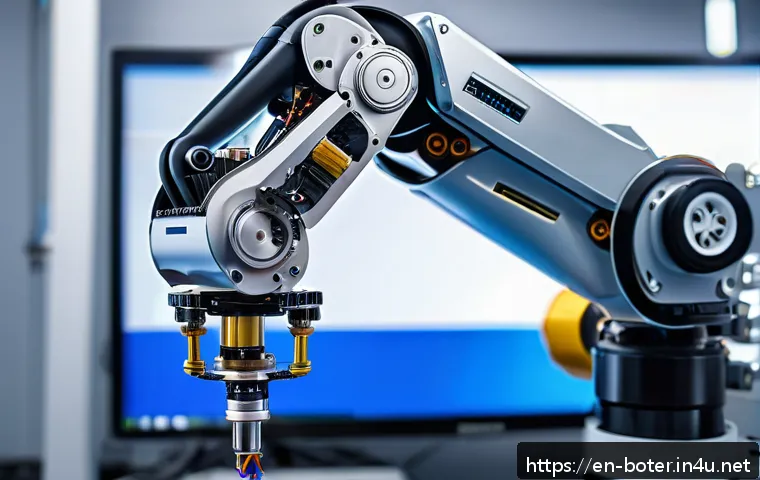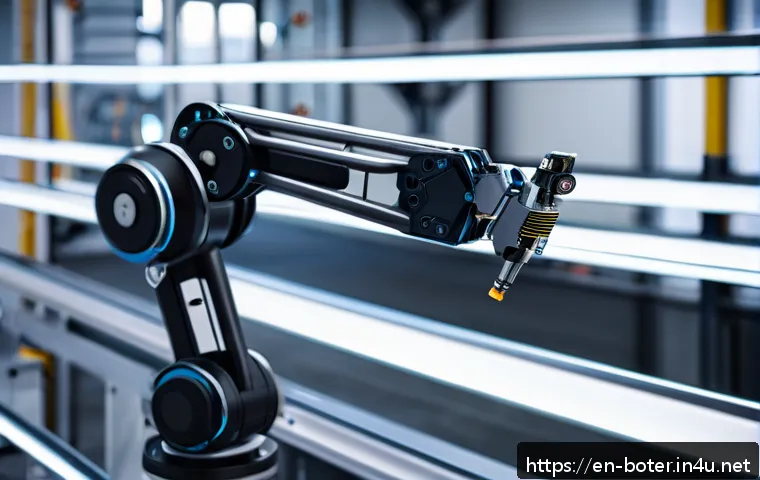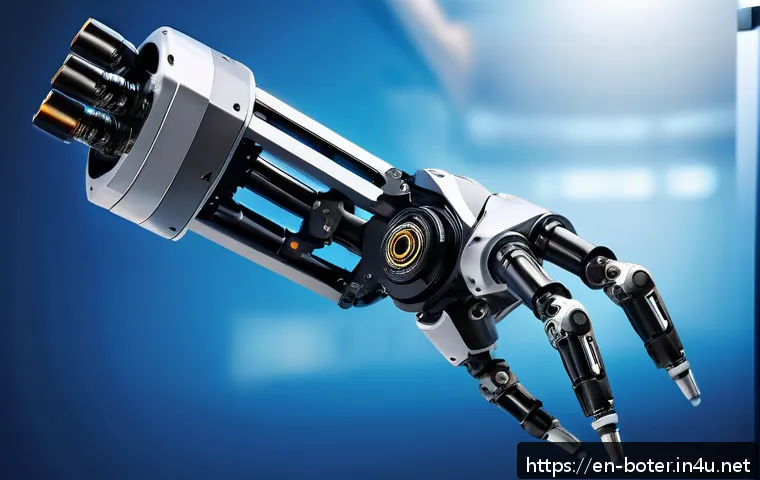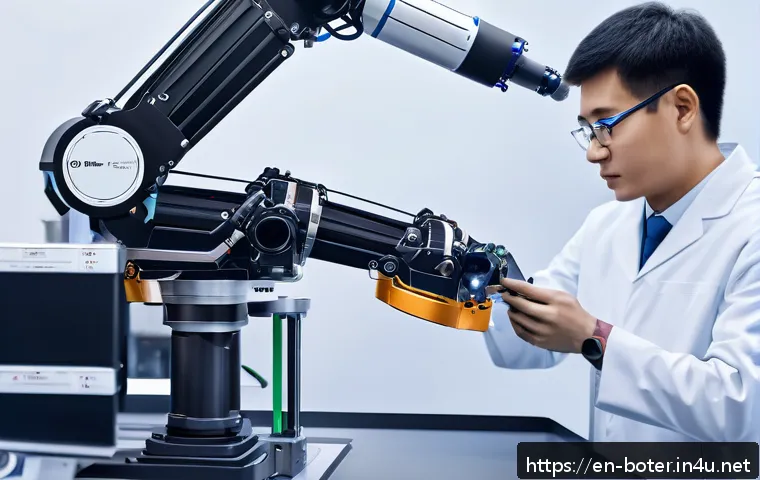
The idea of diving headfirst into the exhilarating world of robotics engineering can feel like navigating an uncharted galaxy, especially when you’re considering the audacious path of self-study.
I remember vividly the initial overwhelm, staring at countless online courses and forums, wondering if I truly had what it takes to master something so complex without a traditional university setting.
But what if I told you that the very landscape of robotics is changing so rapidly that independent, hands-on learning is not just viable, but arguably more critical than ever?
This journey, while demanding, is incredibly rewarding and entirely within your grasp. Let’s delve into it precisely. Today’s robotics isn’t just about building industrial arms on assembly lines; it’s about seamlessly integrating cutting-edge AI for intuitive human-robot interaction, designing agile collaborative robots (cobots) for shared workspaces, and even tackling ethical considerations in autonomous systems.
This dynamic evolution means that practical, applied knowledge gained from real-world projects and open-source contributions often trumps rigid academic silos.
What I’ve truly come to understand is that the most valuable “certification” often comes from the experience of troubleshooting a stubborn motor or successfully deploying a custom-coded AI algorithm on a physical bot.
You’re not just reading textbooks; you’re building the future, piece by meticulous piece.
What I’ve truly come to understand is that the most valuable “certification” often comes from the experience of troubleshooting a stubborn motor or successfully deploying a custom-coded AI algorithm on a physical bot.
You’re not just reading textbooks; you’re building the future, piece by meticulous piece.
Laying the Groundwork: Essential Skills Beyond the Code

Embarking on the self-study path for robotics engineering isn’t just about diving into complex algorithms and circuit diagrams right away. My own journey taught me that the most impactful start is to build a robust foundational understanding of several interconnected disciplines. It felt a bit like preparing for a cross-country road trip – you wouldn’t just jump in the car; you’d check the tires, oil, and map out your route. For robotics, that means getting comfortable with fundamental mathematics, a solid grasp of physics, especially mechanics and kinematics, and developing a problem-solving mindset that embraces iterative learning. I remember spending countless hours on Khan Academy brushing up on linear algebra and calculus, not because I enjoyed it, but because I immediately saw how these abstract concepts translated into robot arm movements or sensor data interpretation. It was a lightbulb moment when I realized that a deep dive into these seemingly basic subjects would save me immense frustration down the line. Furthermore, nurturing logical thinking and breaking down complex problems into manageable chunks is invaluable; it’s a skill you hone with every bug you squash and every new feature you implement. It’s not just about what you know, but how you *think* about what you know.
1. Mathematics and Physics: The Unsung Heroes
- Linear Algebra: Crucial for understanding transformations, robot kinematics, and computer vision. I distinctly remember the struggle of manipulating matrices to represent joint movements until it clicked, and then suddenly, robot arm control made intuitive sense.
- Calculus: Essential for control systems, optimization, and understanding dynamic motion. PID controllers, for example, are a cornerstone of robot control, and their principles are deeply rooted in calculus.
- Classical Mechanics: Forces, torques, dynamics – these are the bread and butter of how robots interact with the physical world. Without a solid understanding here, designing a stable gripper or a balanced mobile robot is a shot in the dark.
- Electromagnetism and Circuits: Understanding how power flows, how motors work, and how sensors transmit signals is non-negotiable. I can’t count the times a simple circuit diagram saved me hours of head-scratching when a sensor wasn’t behaving as expected.
2. Cultivating a Problem-Solving Mindset
- Decomposition: Learning to break down a daunting task, like “build a robot arm,” into smaller, manageable sub-tasks (e.g., choose motors, design links, write inverse kinematics, program control loop).
- Debugging Prowess: This is arguably the most vital skill. My early projects were a chaotic mess of errors. I learned the hard way that a systematic approach to debugging – isolating variables, testing assumptions, logging everything – is a superpower.
- Embracing Iteration: Realizing that perfection is the enemy of progress. My first attempt at anything robotics-related is rarely good, but the key is to learn from its flaws, refine, and try again. It’s a cyclical process of build, test, fail, learn, repeat.
The Core Curricula: Programming, Hardware, and Interfacing
Once your foundational toolkit is sharpened, it’s time to dive into the practical meat of robotics: programming, understanding hardware, and crucially, learning how they speak to each other. This is where the magic truly starts to happen, transforming theoretical knowledge into tangible, moving machines. From my vantage point, the sheer breadth of tools and languages can feel overwhelming, but focusing on widely adopted standards makes the journey far more manageable. I started with Python, because its readability and vast ecosystem of libraries (think NumPy, SciPy, OpenCV) made it incredibly accessible for a beginner trying to grasp complex concepts like inverse kinematics or image processing. But it wasn’t just about picking a language; it was about understanding *why* that language was used in certain contexts and what its limitations were. The true joy came from seeing my lines of code actually make a motor spin or a sensor light up – that immediate feedback loop is addictive and incredibly motivating. Furthermore, don’t shy away from diving into the physical components. Taking apart old electronics, understanding how a servo motor works internally, or even just wiring up an LED with a microcontroller board provides an intuitive understanding that no textbook alone can offer.
1. Programming for Robot Brains
- Python: Hands down, the best entry point. Its clear syntax and extensive libraries like ROS (Robot Operating System), OpenCV, and various machine learning frameworks make it indispensable. I used it for everything from simple motor control scripts to complex path planning algorithms.
- C++: For performance-critical applications, embedded systems, and complex simulations, C++ is king. It’s tougher to learn, but the deeper control it offers over hardware is essential. My advice? Start with Python, then slowly introduce C++ as your projects demand higher efficiency.
- Version Control (Git): Absolutely non-negotiable. Managing code changes, collaborating (even if just with your future self), and recovering from disastrous bugs becomes trivial with Git. I learned this the hard way after losing days of work.
2. Hardware Know-How: From Wires to Wheels
- Microcontrollers (Arduino, ESP32): These are the brains of many hobbyist and small-scale robots. Understanding how to program them to read sensors and control actuators is fundamental. My first successful mobile robot was controlled by an Arduino Uno, and the feeling of accomplishment was immense.
- Single-Board Computers (Raspberry Pi, NVIDIA Jetson): For more complex applications requiring significant processing power (like computer vision or advanced AI), SBCs are vital. They bridge the gap between embedded systems and full-fledged computers.
- Motors and Actuators: Servo motors, stepper motors, DC motors – understanding their principles, how to control them, and their applications is crucial for giving your robot movement.
- Sensors: Proximity sensors, IMUs (Inertial Measurement Units), cameras, LiDAR – these are the robot’s eyes and ears. Learning how to interface with them and interpret their data is a core skill.
Building Your Portfolio: The Project-Based Learning Imperative
If there’s one piece of advice I wish someone had screamed at me when I started, it would be this: build, build, build! Self-studying robotics isn’t about collecting certificates; it’s about demonstrating capability. Every successful project, no matter how small, adds a tangible piece to your portfolio and, more importantly, solidifies your understanding in ways that theoretical study simply cannot. I remember my first attempt at building a simple line-following robot. It was crude, its movements jerky, but the sheer number of problems I had to solve – wiring, motor control, sensor calibration, basic algorithms – taught me more than any online course ever could. It’s where the abstract concepts suddenly become real, messy, and wonderfully challenging. Don’t be afraid to start small. A simple obstacle avoidance robot using an ultrasonic sensor is a fantastic starting point. As you gain confidence, scale up to more complex endeavors like a robotic arm with inverse kinematics or a mobile robot mapping its environment. Each failure is a lesson, each successful implementation a testament to your growing expertise. This iterative process of conception, design, build, test, and refine is the heart of engineering.
1. Start Simple, Scale Up Gradually
- Beginner Projects: Think LED blinking patterns with a microcontroller, a simple line follower, or a servo motor controlled by a potentiometer. These build confidence and solidify basic concepts. My first “robot” was literally just two wheels and a motor controller, and I spent days just getting it to drive straight.
- Intermediate Projects: Move onto obstacle avoidance robots using ultrasonic sensors, basic robotic arms with direct kinematics, or mobile robots controlled via Bluetooth. These introduce more complex sensor integration and control logic.
- Advanced Projects: Consider projects involving computer vision (e.g., object detection with a robotic arm), SLAM (Simultaneous Localization and Mapping) for mobile robots, or even custom drone builds. These push the boundaries of your knowledge and force you to tackle real-world challenges.
2. Document Everything and Share Your Work
- Detailed Documentation: Keep a log of your design choices, code snippets, troubleshooting steps, and lessons learned. Future you will thank you, and it’s invaluable for showcasing your process.
- Online Portfolio: GitHub is your best friend. Host your code, project reports, and even videos of your robots in action. This is your living resume, showcasing your practical skills. I’ve seen firsthand how hiring managers prioritize a strong GitHub profile over a traditional resume.
- Community Engagement: Share your progress on forums, Reddit communities (like r/robotics or r/arduino), or even a personal blog. Getting feedback, asking questions, and helping others solidify your own understanding and build a network.
Navigating the Digital Landscape: Courses, Communities, and Open Source
The beauty of self-study in robotics today is the unprecedented access to high-quality learning resources. Gone are the days when you needed to be enrolled in a top-tier university to learn cutting-edge robotics. However, this abundance can also be a double-edged sword, leading to analysis paralysis. From my personal experience, the key is to be strategic about what you consume. I’ve found that a blend of structured online courses for theoretical foundations, coupled with extensive exploration of open-source projects for practical application, is the most potent combination. Platforms like Coursera, edX, and Udacity offer specialized tracks in robotics, often taught by leading university professors. But just as crucial are the vibrant online communities and the treasure trove of open-source codebases. It’s not just about passively watching lectures; it’s about actively engaging with the material, asking questions in forums, and, most importantly, diving into the code of real-world projects. I often found myself spending hours dissecting a particular ROS package or a GitHub repository to understand how a specific algorithm was implemented. This hands-on, self-directed learning from others’ work is incredibly powerful and accelerates understanding far beyond what any textbook can achieve. Remember, knowledge is freely available; the discipline to acquire it and apply it is what truly matters.
1. Curated Online Learning Platforms
- Specialized MOOCs (Massive Open Online Courses): Look for courses from universities like UPenn (Robotics Specialization on Coursera), Georgia Tech, or Stanford. These often provide structured learning paths from fundamental concepts to advanced topics. I found these invaluable for getting a comprehensive overview before diving into specifics.
- Tutorial Websites & Blogs: Websites like Adafruit, SparkFun, and numerous personal robotics blogs offer fantastic project-based tutorials. These are perfect for quick, practical learning specific to a component or a small system.
- YouTube Channels: Channels like ‘Boston Dynamics’, ‘Robotics Academy’, or ‘The Bionics Lab’ offer great visual explanations and inspiration. Seeing real robots in action can solidify theoretical concepts.
2. Harnessing the Power of Open Source
- Robot Operating System (ROS): If you’re serious about robotics, learning ROS is almost mandatory. It’s a flexible framework for writing robot software, and its ecosystem is vast. I initially found it daunting, but countless tutorials and its active community made it manageable.
- GitHub & GitLab: A goldmine of open-source robotics projects. Clone repositories, study the code, contribute if you can. It’s the best way to see how real-world robotics problems are solved.
- Open-Source Hardware: Projects like OpenBot or OpenManipulator provide blueprints and code for building complex robots from scratch.
3. Engaging with Online Communities
- Reddit: Subreddits like r/robotics, r/arduino, r/raspberry_pi, r/MachineLearning are active hubs for discussions, troubleshooting, and sharing projects. I’ve received invaluable help and inspiration from these communities.
- Discord Servers & Forums: Many specific robotics projects or hardware platforms have dedicated Discord servers or official forums where you can ask questions and connect with experienced developers.
| Resource Type | Best For | My Personal Experience/Tip |
|---|---|---|
| Online Courses (MOOCs) | Structured foundational knowledge, theoretical depth, verified learning paths. | Excellent for gaining a comprehensive overview. Don’t just watch; do the assignments and projects. I often paused lectures to try out concepts in code. |
| Open-Source Projects (GitHub, ROS) | Practical application, understanding real-world codebases, collaborative learning. | This is where theory meets reality. Fork projects, break them, fix them. It’s messy but incredibly rewarding. Look for projects with good documentation. |
| Online Communities (Reddit, Discord) | Troubleshooting help, inspiration, networking, staying updated on trends. | Don’t be afraid to ask “stupid” questions; someone else probably has the same one. Actively participate by trying to help others too. |
| Textbooks & Research Papers | Deep theoretical dives, cutting-edge research, advanced algorithms. | Great for understanding the “why” behind complex algorithms. Can be intimidating, but crucial for true mastery. Pick one or two core texts and master them. |
Embracing the Iterative Process: Failure as a Stepping Stone
If there’s one thing robotics will teach you, it’s humility. I can recount countless moments of frustration – a motor refusing to spin, a sensor giving nonsensical readings, or a robot crashing into a wall for the hundredth time. My first significant project, a simple robotic arm, seemed determined to defy every line of code I wrote. I distinctly remember the overwhelming urge to give up, to just walk away from the tangle of wires and unresponsive servos. But what I discovered, through sheer stubbornness more than anything else, was that each failure wasn’t an endpoint, but a signpost pointing towards a solution. It forced me to re-examine my assumptions, to delve deeper into documentation, and to systematically debug my code and hardware. This constant cycle of building, testing, failing, and refining is not merely a part of the process; it *is* the process. It builds resilience, fosters meticulous attention to detail, and ultimately, accelerates your learning faster than any perfectly executed first attempt ever could. In fact, some of my most profound learning experiences came directly from spectacular failures. The ability to troubleshoot effectively and to iterate rapidly is a hallmark of a skilled robotics engineer, and it’s a skill refined not by success, but by overcoming countless setbacks.
1. The Unavoidable Truth: Errors Are Opportunities
- Systematic Debugging: This is an art form. When things go wrong, resist the urge to randomly change code. Learn to isolate variables, use print statements or debuggers extensively, and verify each component of your system individually. I’ve wasted hours chasing phantom bugs only to realize a wire was loose or a variable was misspelled.
- Hypothesis Testing: Treat each problem as a scientific experiment. Formulate a hypothesis about why something isn’t working, design a test to confirm or deny it, and then proceed based on your findings. This structured approach saves immense time and frustration.
- Learning from Documentation: Often, the solution lies in the datasheets of your components or the official documentation of the libraries you’re using. I used to skim these; now, they’re my first port of call when troubleshooting.
2. The Power of Iteration and Prototyping
- Start with Minimum Viable Products (MVPs): Don’t try to build the perfect robot on your first try. Build the simplest version that demonstrates a core functionality, test it, learn from it, and then add complexity. My first robot could barely move; only after perfecting its basic movement did I add sensors.
- Rapid Prototyping: Embrace tools that allow for quick iteration, like 3D printing for custom parts or breadboards for circuit design. The faster you can test an idea, the faster you can learn and refine.
- Version Control for Projects: Just like code, version control your hardware designs, wiring diagrams, and even project notes. This allows you to revert to a working state when a new change breaks everything.
Connecting and Contributing: Building Your Robotics Network
Self-study doesn’t mean you’re on a solo island; in fact, building a robust network is just as crucial, if not more so, than formal education. I used to think my solo projects were enough, but it was only when I started engaging with the broader robotics community that my learning truly accelerated. These connections provide not just technical insights, but also mentorship, collaboration opportunities, and even potential career paths you might never discover on your own. I vividly remember attending my first local robotics meetup – I felt like an imposter surrounded by seasoned engineers, but their willingness to share insights and answer my beginner questions was incredibly empowering. It wasn’t just about problem-solving; it was about understanding different perspectives on design, ethics, and the future of the field. Contributing to open-source projects, even by fixing a small bug or improving documentation, also opens doors. It’s a fantastic way to get your code reviewed by experienced developers and to make tangible contributions that are visible to potential employers. Don’t underestimate the power of a shared passion to connect you with like-minded individuals who can uplift your journey.
1. Engaging with Local and Online Communities
- Meetups and Workshops: Search for local robotics clubs, maker spaces, or tech meetups in your area. Attending these events, even just to listen, can open up a world of connections and insights. I found my first practical internship lead through a casual conversation at a local hackerspace.
- Conferences and Expos: While some might be too expensive initially, many offer student rates or volunteer opportunities. Even virtual conferences can provide excellent networking opportunities. These are great for spotting emerging trends and technologies.
- LinkedIn: Connect with robotics engineers, researchers, and companies. Follow thought leaders in the field. Don’t be afraid to send polite, personalized connection requests with a brief mention of your shared interest.
2. Contributing to the Open-Source Ecosystem
- Start Small with Contributions: Begin by improving documentation, fixing minor bugs, or adding small features to existing open-source robotics projects (especially ROS packages). This builds your reputation and allows you to learn from established codebases.
- Build Your Own Open-Source Projects: Share your projects on GitHub, even if they’re simple. Others might find them useful, offer feedback, or even collaborate, leading to unexpected learning opportunities.
- Participate in Hackathons: Many hackathons focus on robotics or related fields. These intense, collaborative events are fantastic for rapid learning, networking, and building impressive prototypes under pressure.
Concluding Thoughts
Looking back, my journey into robotics wasn’t a perfectly paved path but a fascinating, often frustrating, yet ultimately rewarding maze. What truly empowered me wasn’t just acquiring technical knowledge, but embracing the iterative process – the countless hours spent debugging, the inevitable failures, and the sheer joy of seeing a complex concept come alive in a tangible machine.
It’s a testament to persistence, a curious mind, and the incredible satisfaction of building something truly functional. So, if you’re standing at the precipice of this incredible field, know that the path is yours to forge, armed with dedication and a willingness to learn from every twist and turn.
Dive in, get your hands dirty, and let your passion guide you.
Useful Information to Keep in Mind
1. Always start your projects with a clear, achievable goal. Don’t aim for a humanoid robot on day one; master the basics first. This builds confidence and provides tangible wins.
2. Debug relentlessly. Half of robotics is problem-solving. Develop a systematic approach to identifying and fixing issues – it’s arguably the most valuable skill you’ll acquire.
3. Engage actively with online communities like Reddit and Discord. They are invaluable for support, inspiration, finding solutions to obscure problems, and staying updated on new tech.
4. Leverage open-source resources. GitHub is a goldmine for code, and ROS is an essential framework for serious robot development. Don’t reinvent the wheel when excellent solutions already exist.
5. Balance theoretical study with hands-on building. The abstract concepts truly solidify when you apply them to a physical robot, even if it’s just a simple one. Practical application deepens understanding.
Key Takeaways
Self-study in robotics thrives on a blend of robust foundational knowledge, continuous hands-on project work, active engagement with open-source tools, and leveraging vibrant online communities.
Embrace failure as a critical learning tool and meticulously document your journey. Building a robust portfolio of real-world projects is paramount, proving your capabilities far beyond any theoretical understanding.
Your network and collaborative contributions will accelerate your growth, transforming challenges into stepping stones toward mastery in this exciting field.
Frequently Asked Questions (FAQ) 📖
Q: You vividly described the initial overwhelm of staring at countless online resources. For someone just starting out on this self-study path, where do you even begin to cut through the noise and effectively learn robotics?
A: Oh, tell me about it! That feeling of being drowned in information is absolutely real. I remember vividly just how paralyzing it felt, wondering if I’d ever truly grasp something so complex without the structured hand-holding of a traditional university.
What worked for me, and what I’ve seen success with others, is to stop trying to swallow the whole ocean at once. Start tiny. Instead of aiming to build a full-fledged autonomous drone, maybe pick a super specific, bite-sized project.
My breakthrough was when I decided to just get a simple robot arm to pick up and drop a ball. Just that. It forced me to learn about motor control, basic inverse kinematics, and some very rudimentary programming, but it was all applied.
The key is hands-on. Don’t get stuck in tutorial hell; actually, do something. Go find an affordable development board, like an Arduino or a Raspberry Pi, and just start blinking LEDs, then moving servos.
You’ll stumble, you’ll get frustrated – believe me, I’ve spent hours debugging a single line of code, wanting to throw my laptop across the room – but those moments of struggle, followed by that triumphant “AHA!” when something finally clicks, those are your real certifications.
Join online communities too; seeing others’ struggles and successes is incredibly motivating and helps you realize you’re not alone in this wild ride.
Q: You mentioned that independent, hands-on learning is “more critical than ever.” Does this imply that a traditional university degree in robotics is becoming less valuable, or how does self-taught experience really stand out in the job market?
A: That’s a fantastic question, and it’s something I’ve grappled with quite a bit, especially when I first started wondering if I was making a massive mistake by not going back to school.
Look, a traditional degree certainly gives you a foundational theoretical understanding and a structured environment, which is invaluable for some. But what I’ve genuinely seen, especially over the past few years, is a significant shift in what companies are really looking for.
The industry is moving so fast that academic curricula, by their very nature, can sometimes struggle to keep pace with the bleeding edge of AI integration or the rapid evolution of collaborative robotics.
What truly makes self-taught experience stand out, in my observation, isn’t just knowing about robotics, but having tangible proof that you can do it.
It’s your portfolio of projects, your contributions to open-source initiatives – showing you’ve actually designed, built, and debugged things in the real world.
I’ve personally been in interviews where my detailed explanation of how I troubleshooted a PID controller for a small mobile robot I built at home resonated far more than any list of courses.
It shows initiative, problem-solving prowess, and a genuine passion that’s hard to fake. Your “certification” becomes the functional robot sitting on your desk or the active GitHub repository.
Q: Robotics is clearly evolving beyond just industrial arms. For aspiring self-learners, what specific emerging areas or skills should they really prioritize to ensure they’re building truly relevant and future-proof expertise?
A: This is where it gets really exciting, but also a bit dizzying because the landscape is changing at warp speed! If I were starting today, or advising someone, I’d emphatically say to look beyond just the mechanics.
While understanding hardware is fundamental – motors, sensors, mechanics, you absolutely need that – the real frontier, and where much of the innovation and demand lies, is in the integration of intelligence.
Dive deep into AI, specifically machine learning and computer vision as they apply to robotics. Think about how a robot can understand its environment and interact intuitively with humans.
That means exploring things like natural language processing for human-robot dialogue, or reinforcement learning for complex decision-making. Also, don’t neglect the “soft” side of things, which paradoxically is becoming very hard tech: ethics in AI and autonomous systems.
Understanding the societal implications, biases, and safety protocols is no longer just for philosophers; it’s a critical engineering challenge. I’ve found that companies are desperate for folks who can not only build a functional robot but also anticipate its impact and ensure it operates safely and responsibly in a shared human space.
So, yes, get your hands dirty with hardware, but pour a significant chunk of your energy into the brains and the societal consciousness of these incredible machines.
That’s where the future truly is.
📚 References
Wikipedia Encyclopedia
구글 검색 결과
구글 검색 결과
구글 검색 결과
구글 검색 결과
구글 검색 결과